U.S. Considering Foreign Designs, Shipyards for New Navy Frigate, Destroyer Work in $1.85B Study
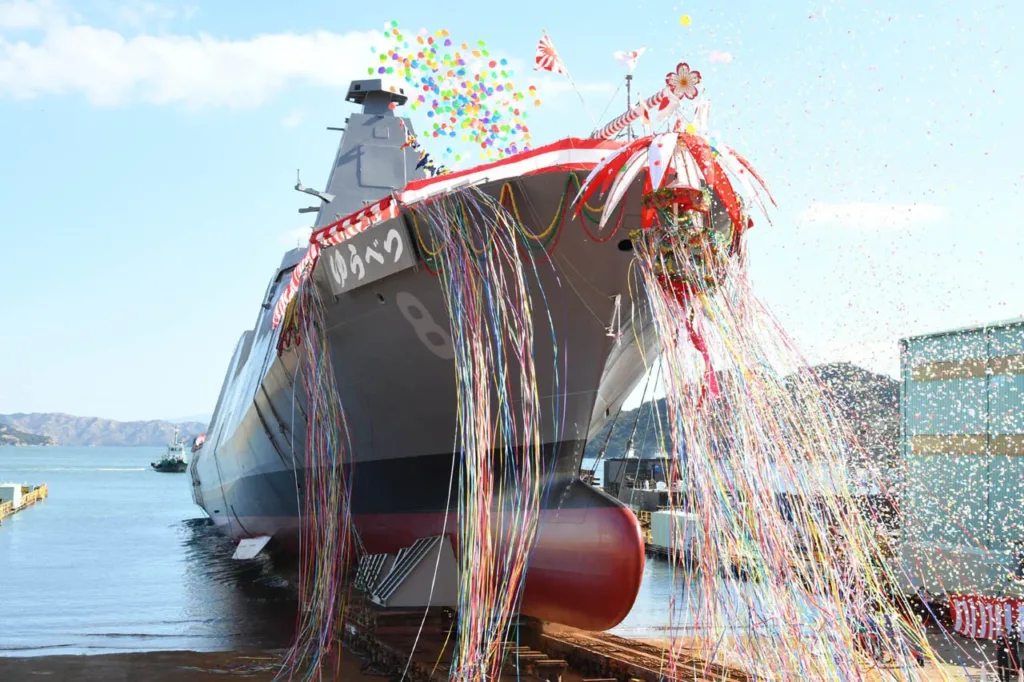
American officials are considering foreign designs and having U.S. warship components built in overseas yards as part of an expansive manufacturing study proposed in the Fiscal Year 2027 budget, USNI News has learned.
To expand naval shipbuilding capacity for U.S. warships, the FY 2027 budget submission includes $1.85 billion in research and development funding for a pair of studies on building future foreign frigate and destroyer designs, according to budget documents reviewed by USNI News.
The funds “will be used to investigate a full spectrum of procurement options to attract more shipbuilding capacity into domestic shipyards and bring additional ships into the fleet – including studies of the ability of allied shipbuilding companies to build ships or components,” reads the budget language. “This funding will be split into two separate study and procurement efforts targeting the fleet’s future [cruiser/destroyer] and frigate inventories.”
The study request, which is part of proposed reconciliation funding in addition to the Pentagon base budget, comes as the White House Office of Management and Budget pressures domestic shipyards to deliver surface ships and submarines faster.
“To be clear, we need more ships, and we need them right now,” OMB director Russ Vought said Wednesday during a keynote at the Navy League’s annual Sea-Air-Space symposium. “If we cannot get the ships we need from traditional sources at cost and on time, we will get them from other shipyards.”
Specifically, the Pentagon has directed the Navy to consider Japanese and Korean shipyards and designs for use in the U.S. fleet, USNI News has learned.
Earlier this week, when asked about the study, the now former Secretary of the Navy John Phelan told USNI News that the Department of the Navy was considering foreign shipyards for not only auxiliary supply ships, but also for work on U.S. warships.

“We’ve been directed to take a look at the possibility of having foreign combat ships,” Phelan said Tuesday. “If we were to go down that path, we would have to look at ships that we think are producible and could hit the fleet fast. That would tend to lead you more to the Korea[s], Japans of the world than the others, just because of producibility.”
South Korea and Japan both field guided-missile destroyers that use the American-designed Aegis combat systems and American AN/SPY-1 radars as the backbones of their surface fleets.
European allies like the Netherlands, Norway and Spain also field the Aegis baseline on their own guided-missile warships. While some of the ships share systems, U.S. combatants are built to a higher survivability standard than most allied navies. For example, modifying the original Italian design of the Constellation-class guided-missile frigate led to costly design overruns and ultimately the program’s cancellation.
After Phelan’s removal Wednesday, three sources familiar with the Pentagon’s budget deliberations confirmed to USNI News that the intent of the $1.85 billion budget item is to consider using foreign designs for U.S. Navy warships, with at least some of the work occurring in foreign yards.
Two sources said the push for the study came from outside the Navy. The sources confirmed Phelan’s comments that the work would focus on Korean and Japanese designs and yards.
‘Finland Model’

The Trump administration has been frustrated with the pace of U.S. naval and Coast Guard shipbuilders, actively encouraged foreign shipbuilders to set up shop domestically and looked to foreign builders for auxiliaries and cutters.
The FY 2027 budget justification books say the sea service is considering “foreign shipbuilding opportunities” for the first two ships in a new class of strategic sealift ships and a class of bulk fuel vessels.
Last year, the U.S. Coast Guard elected to build two Arctic Security Cutter designs for a new class of medium icebreakers. Shipyards in Finland will build the lead ships as part of an Ice Pact cooperative agreement between the U.S., Finland and Canada.
Canadian shipbuilder Davie’s yard in Texas and Bollinger’s shipyard in Louisiana will build the follow-on ships in what Vought called the “Finland model” in his speech this week.
“The initial four ships of an 11-ship order will be built in Finland, and then they will be delivered prior to President [Donald] Trump leaving office,” Vought said. “The remaining seven ships of the order will be built in Bollinger’s and Davie’s shipyards in the United States after their parent companies have made significant investments to modernize their infrastructure,” he continued. “This overall effort will not only produce ships for our Coast Guard, but also result in American shipyards with more heavy industrial capacity into the future.”
Korean and Canadian shipyards have followed Italian and Australian companies in setting up shipbuilding subsidiaries in the U.S.
Davie, builder of one of the Coast Guard’s medium security cutters, bought Gulf-Cooper in Texas and pledged a $1 billion expansion, while Hanwha bought the Philly Shipyard in Philadelphia, Pa., and is actively courting more U.S. Navy shipbuilding business.
In two recent engagements as part of the FY 2027 budget rollout, Navy deputy assistant secretary for budget Rear Adm. Ben Reynolds pointed to Hanwha’s investment in the Philly Shipyard as the type of avenue the U.S. wants to pursue to expand shipbuilding capacity.
“The best answer for us is to get a foreign investment – foreign partnership – that will help us in our shipyards here in the United States,” Reynolds told reporters during a roundtable last week ahead of the budget submission. “And I think that there is a lot of capacity and let’s use this expertise – just like we’ve seen in other industries. If we’ve done well with other industries with foreign partners, we can do it with shipbuilding. I think that’s important.”
During a Tuesday briefing as part of the budget’s formal unveiling, Reynolds said the U.S. will explore all options to increase capacity.
“We will continue to look over this next year plus at if there are opportunities to team with foreign shipyards for construction as well, but I think that what we want to focus on most is what we’re building here in the United States with the teamwork of our foreign shipyards,” he said.

Building vessels or ship components in overseas yards would require Congressional support and waivers. Lawmakers will get the chance to weigh in during the annual appropriations and authorization process beginning on Capitol Hill as the committees consider the administration’s budget.
Federal law restricts the construction of warships for the U.S. Navy to American shipyards unless there is a waiver from the president on national security grounds. The U.S. has bought smaller vessels like patrol boats and rigid-hull inflatable boats from allies in the past. During World War II, the U.S. purchased small frigates from Canada as part of the Reverse Lend-Lease program. With those exceptions, the last time the U.S. bought a major surface combatant from a foreign shipbuilder was in the late 19th century, when the Navy purchased two New Orleans-class cruisers from the U.K. shipbuilder Armstrong Whitworth.
Any push to build warships or components abroad is likely to receive criticism from some lawmakers and domestic shipbuilders who say yards in the U.S. are not at capacity.
A trade group representing U.S. shipbuilders criticized the study in a statement to USNI News on Friday.
“We don’t need to spend millions of taxpayer dollars to study what we already know; the U.S. has the industrial strength, skilled workforce, and technical expertise to build and sustain America’s maritime force,” Shipbuilders Council of America president Matthew Paxton said in the statement to USNI News.
“The U.S. shipyard industrial base has proven its ability to deliver the most advanced naval vessels in the world on time and on budget. With consistent investment and clear direction from policymakers and the administration, the domestic shipbuilding industry stands ready to meet the growing demand and support the Navy’s long-term mission, without compromising national security.”