3 Cargo Ships Damaged in Suspected Iranian Attacks in the Strait of Hormuz

Suspected Iranian projectiles hit three commercial ships Wednesday in the Strait of Hormuz, according to the United Kingdom Maritime Trade Operations.
The crew of at least one ship – Thai-flagged Mayuree Naree – evacuated, leaving only a skeleton crew behind. UKMTO reported an unknown projectile hit the ship, while pictures circulating on social media site X suggest it could have been an unmanned underwater vehicle.
The ship, owned by Precious Shipping Public Company Limited, was in the strait after leaving port in Khalifa, United Arab Emirates, according to the Royal Thai Navy. The Omani Navy rescued 20 of the 23 crew members and is working to rescue the remaining three.
Precious Shipping told Reuters that three of the crew members were believed to be trapped in the engine room.
The Islamic Revolutionary Guard Corps claimed responsibility for the strike on the Thai-flagged ship, according to Reuters. Iran’s naval capability is divided between the Islamic Revolutionary Guard Corps Navy, a sectarian force in charge of the Strait of Hormuz and the coastal defense of Iran, and the Iranian Navy, which includes submarines and surface ships.
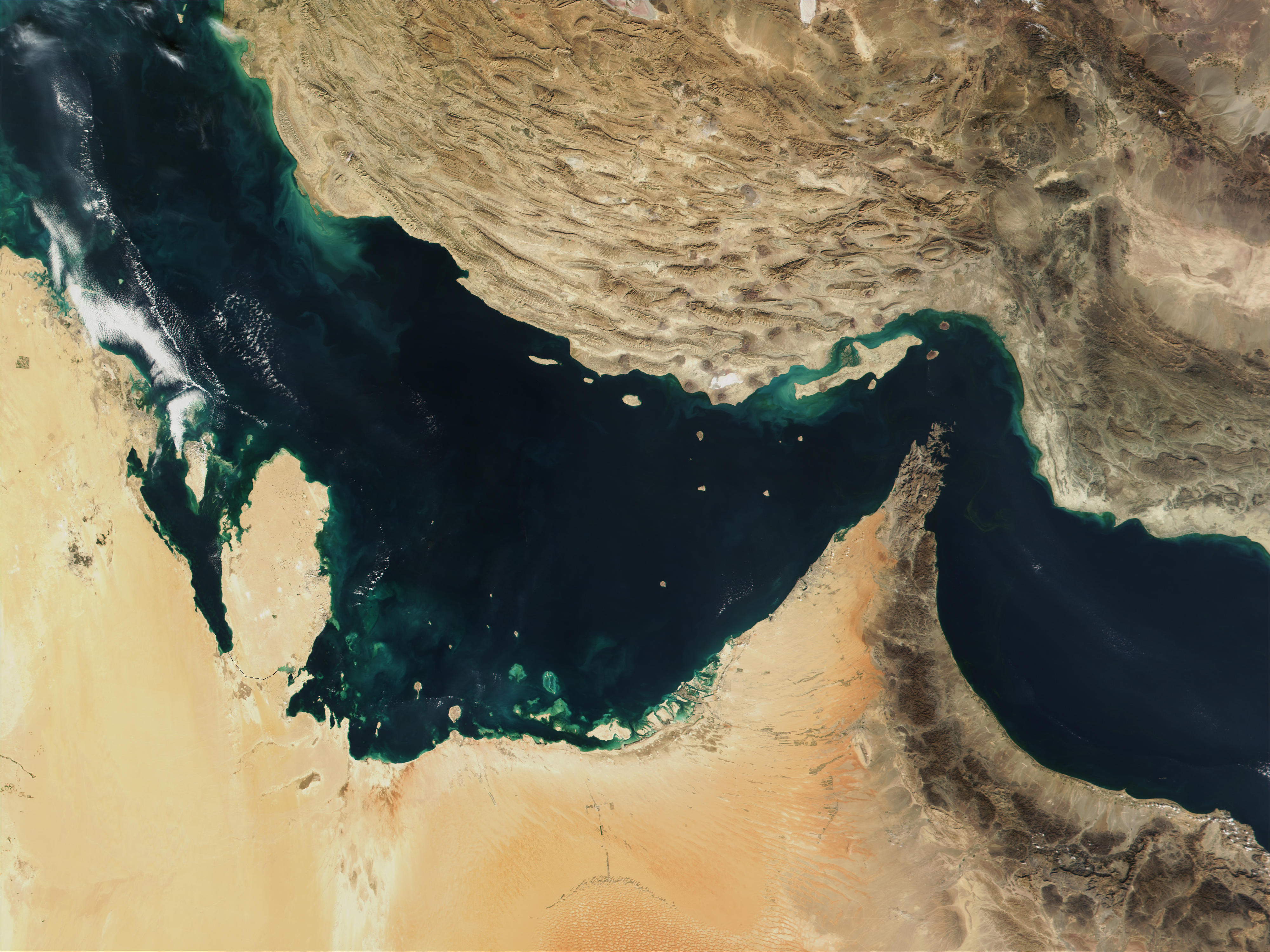
The other ships – MV ONE Majesty and MV Star Gwyenth – were hit off the coast of the United Arab Emirates. UKMTO reported that unidentified projectiles hit both ships and that both crews are safe.
ONE Majesty had minor damage and continued underway, while Star Gwyenth is anchored and has damage to its hull, according to the March 11 advisory from the Joint Maritime Information Center, the messaging service under the multinational maritime partnership Combined Maritime Forces that was set up in February 2024 during the Houthi Red Sea campaign.
Star Bulk CEO Petros Pappas told The New York Times that Star Gwyenth was hit while anchored and that he thought it was accidental.
Seventeen ships have been hit in the Strait of Hormuz since Feb. 28, when the conflict between Iran, U.S. and Israel began. There are six confirmed deaths, according to the International Maritime Organization. A seafarer on sanctioned ship Skylight is missing. A shipyard worker was injured in the attack on MT Stena Imperative.

Wednesday’s attacks on the three ships come amid reports that Iran began to lay mines in the Strait of Hormuz, adding another layer of danger for commercial ships that need to transit the waterway. JMIC has not confirmed any evidence that Iran laid mines. Likewise, the U.S. military has not confirmed reports of mines in the strait.
On March 11, there were seven cargo vessels and one tanker that transited the strait, according to the daily JMIC advisory. JMIC does not track ships that are considered part of the “shadow fleet,” or internationally sanctioned ships that use deceptive measures.
U.S. Central Command warned Wednesday that Iran is using civilian ports for military operations in the Strait of Hormuz.
“This dangerous action risks the lives of innocent people. Civilian ports used for military purposes lose protected status and become legitimate military targets under international law,” reads the CENTCOM news release.
On Tuesday, Chairman of the Joint Chiefs of Staff Gen. Dan Caine told reporters at the Pentagon that the U.S. is assessing how it could provide escorts for ships in the Strait of Hormuz.

However, even if the U.S. follows through with some protection, it likely will not resume normal oil supply, according to shipping analysis Lloyd’s List.
A convoy scheme that includes protection for five ships would be the most realistic way to resume shipping in the strait, according to Lloyd’s List. Still, due to the physical constrictions of the strait, a best-case scenario would see 10 percent of the usual flow of tankers moving through the waterway.
Protection for commercial vessels would also likely need to include air and intelligence support in addition to ships, USNI News previously reported.
As strait crossings continue to be an issue, oil companies are looking to alternative ports and routes to move their supply.
Ports in Yanbu, Saudi Arabia; Fujairah, UAE and Muscat, Oman, are seeing much higher loadings than usual, according to Lloyd’s List. There were 6.52 million barrels lifted per day between March 2 and 8, compared to the 3.44 million barrels per day average sustained since January 2023.
The Brent crude oil price is down 4.8 percent on March 11 from the previous day, with the price at $89.84 per barrel, according to the Energy Information Administration. The price was $71.32 on Feb. 27, the day before the U.S.-Israel campaign against Iran began.