Philippines Could Receive $2.5 Billion in Security Aid from U.S. Defense Bill

Manila could receive $2.5 billion in U.S. security assistance through the 2026 National Defense Authorization Act (NDAA), marking Washington’s most intensive defense investment into the Philippines since the Cold War.
The Philippine Enhanced Resilience Act (PERA) was passed by the Senate on Monday as part of the 2026 NDAA. Introduced by senators Bill Hagerty (R-Tenn.) and Tim Kaine (D-Va.) in 2024, the legislation seeks to open up $500 million in security assistance annually for five fiscal years in support of Philippine defense modernization efforts and military cooperation between the U.S. and Manila.
“The Philippines is a key ally of the United States, and we must strengthen cooperation with our partners across the region to counter China’s aggression and help ensure freedom, security and prosperity in the Indo-Pacific,” reads a joint news release from Kaine and Hagerty.
While PERA is slated to bring in a total of $2.5 billion over a half-decade, the NDAA’s provisions will open up $1.5 billion for FY 2026. The funds aim to provide Manila’s forces with equipment and training to “safeguard the territorial sovereignty of the Philippines,” the defense bill reads.
PERA prioritizes the development of Philippine coastal defense, long-range fires, air defense and maritime domain awareness capabilities. Manila has sought these systems under its Horizon Three military modernization program, but the Philippines has struggled to fund procurement and infrastructure projects.
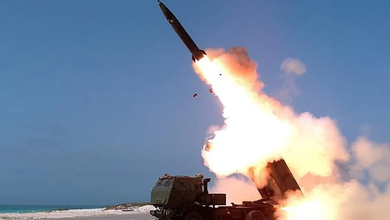
Philippine Secretary of National Defense Gilbert Teodoro and Armed Forces of the Philippines Chief of Staff Gen. Romeo Brawner have sought American-made missile systems such as the Mid-Range Capability – a ground-based Mark 41 vertical launching system capable of firing Tomahawk cruise missiles that can reach mainland China – and High Mobility Rocket Artillery Systems to deter Chinese forces.
The NDAA also eyes the expansion necessary for Philippine civilian and military infrastructures “to prepare for regional contingencies,” according to language in the defense bill. The NDAA stipulates that Congress will require an annual report from the Department of State detailing the progress of these enhanced defense efforts.
American efforts to bolster its longtime Southeast Asian ally drastically increased in recent years amid Beijing’s efforts to assert its claim over the South China Sea, which includes the majority of the western Philippine exclusive economic zone. The Biden Administration previously committed $500 million in security assistance and deployed drones to the Philippines last year, efforts that the current Trump Administration have doubled down on.

Since 2022, Chinese forces have ramped up their usage of water cannons, ramming maneuvers, lasers and other aggressive measures against Philippine civilians and government vessels at disputed reefs and shoals across the region.
For Washington, a clash involving the death of a Philippine sailor, soldier or civilian could draw American forces into a conflict under its 1951 defense commitments. Last year’s June 17 Incident at Second Thomas Shoal, which saw a Philippine Navy SEAL lose his thumb when his vessel was rammed by the China Coast Guard, prompted a warning order for Australia-based U.S. Marines to deploy to the Philippines in the event the incident escalated, according to Stars and Stripes.
The $2.5 billion in American security assistance also comes amid increasingly publicized concerns from Philippine political and military leadership in regards to the country’s involvement in a potential Chinese invasion of Taiwan.
“Any military conflict in the Taiwan Strait would inevitably affect the Philippines,” reads the 2023-28 National Security Policy of Philippine President Bongbong Marcos. Philippine and American Marines have deployed troops and missiles this year to the strategic Batanes Islands, an archipelago in the middle of the Luzon Strait.
An American-Philippine delegation also visited a new forward operating base located 110 miles south of Taiwan to survey its potential to host joint defense operations and drills last week.
“At a time when the National Security Strategy of the U.S. [has] raised some eyebrows in Europe, but also Asia, Manila will certainly welcome this development,” Georgi Engelbrecht, a Manila-based senior analyst with International Crisis Group, told USNI News.
Engelbrecht highlighted the new line of security funding as a sign of the bipartisan consensus to back the Philippines in its struggle against China, as well as the latest in “positive developments” under the second Trump administration for Manila.
“A critical element of the partnership is of course Washington’s commitment to Manila in case of a possible maritime contingency in the South China Sea. For some, Washington’s pledge to stand by Manila in a maritime crisis remains ambiguous, especially considering the recent rapprochement with China, and it hinges on President Trump and his inner circle. Yet Congress is making sure the Philippines gets the defense support it needs,” said Engelbrecht.