The rifle lay between my boots in pieces.
The Difference the Uniform Did Not Show
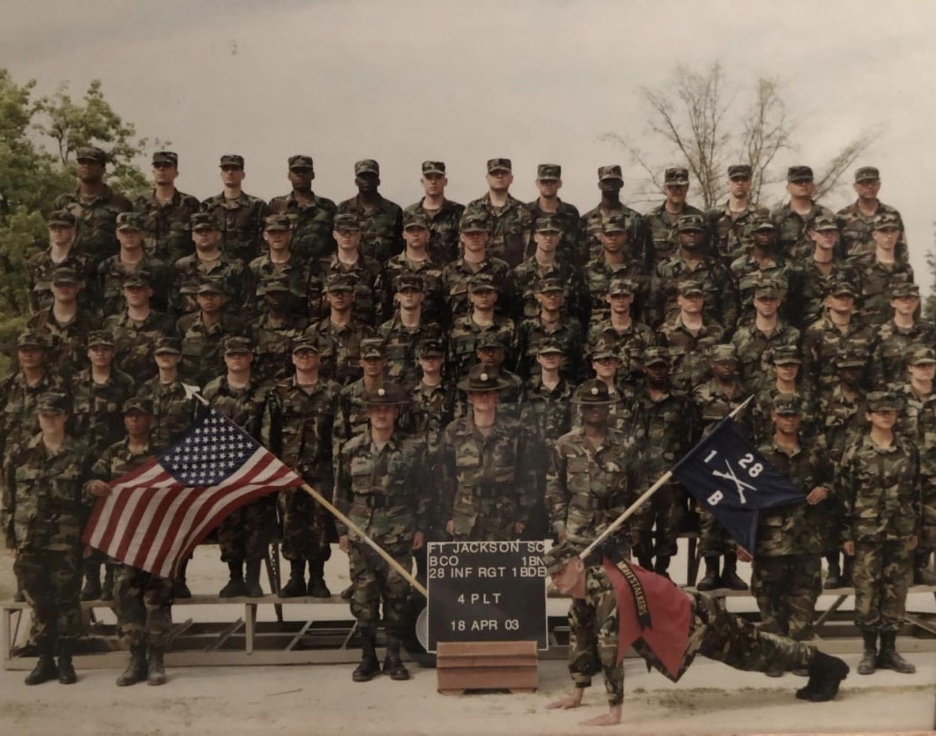
Outside the company bay, everyone was cleaning weapons down to the smallest parts. There were no chairs or benches. I settled into a flat-footed squat without thinking. My heels rested on the ground; I could have stayed there for hours.
I was working grime from the metal when a drill sergeant stopped beside me.
“You’re not from here are you?”
I looked up, already rising.
“Did you grow up overseas?”
“Yes, Drill Sergeant.” I told him I had been born in Bahrain and had come to the United States as an immigrant.
The answer exposed something the uniform had concealed. Around me, everyone wore the same clothes and followed the same commands. Most soldiers seemed to assume we were all American, and I never corrected them. I wanted no extra question attached to my name.
His voice softened.
“No, no. You’re okay. You don’t have to get up.”
He said he rarely saw Americans sit that way, flat-footed for so long. There was no mockery in it. He had noticed a habit my body carried across oceans before I knew it could identify me.
I do not remember whether I returned to the squat or folded my legs like the soldiers nearby. What remains is how quickly I was willing to change. Being noticed felt dangerously close to being wrong.
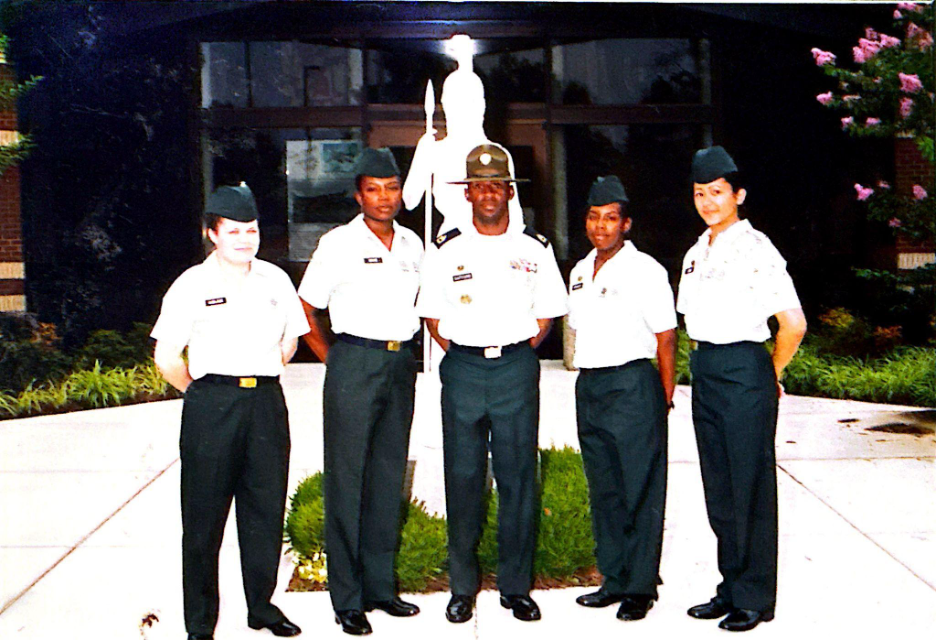
Citizenship was nowhere in my mind when I enlisted. I had already left home and rented a room from a friend’s family. The clothing-store job barely covered what I needed; some weeks, rent and food seemed to compete. The uniform promised a paycheck and a place far from California. Perhaps it promised family too, though I would not have said that aloud.
Below me, the rifle waited in pieces, each part designed to return to its proper place.
I wanted no such return.
The Army could carry me farther from home than anything else I had found.
Feeding an Army Overseas
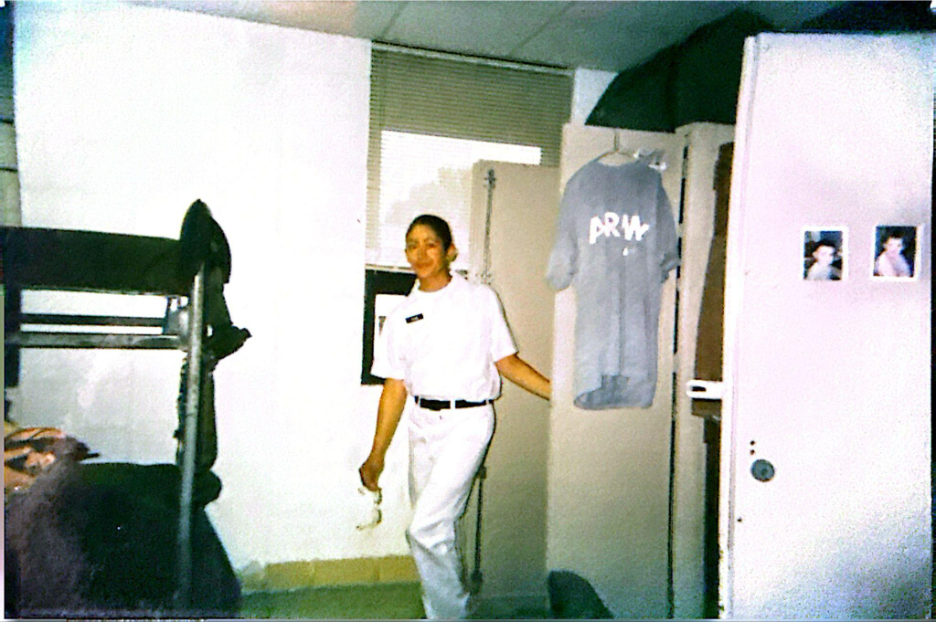
It carried me to Mannheim, Germany, where I became a food service specialist in a dining facility that came alive before dawn.
On most morning shifts, I reported by five in pressed cook whites, black boots shined for inspection before the kitchen ruined the polish. Soul food drew our largest lunch crowd, so Thursdays began an hour earlier. The room was spotless when we entered. Overhead lights warmed into a low hum, ovens clicked on, sheet pans struck stainless steel, and fryer baskets disappeared into grease.
The newest cook worked the grill.
I stood in full view while soldiers arrived hungry from physical training and called out omelet orders faster than I could hold them in my head. Chopped vegetables waited near my hands. Preparation meant I could manage several orders. Running out of anything happened in full view. Sweat gathered under my hairnet while eggs spread across the hot surface and the line kept moving.
By lunch, the grill held burgers that had to be cooked through. Afterward came the scraping. One of my noncommissioned officers cracked whole eggs, shells and all, onto the hot steel and worked them beneath the brush. I thought he was wasting food until the grease lifted. The kitchen had its own intelligence, passed from one cook to another through tricks no recipe card contained.
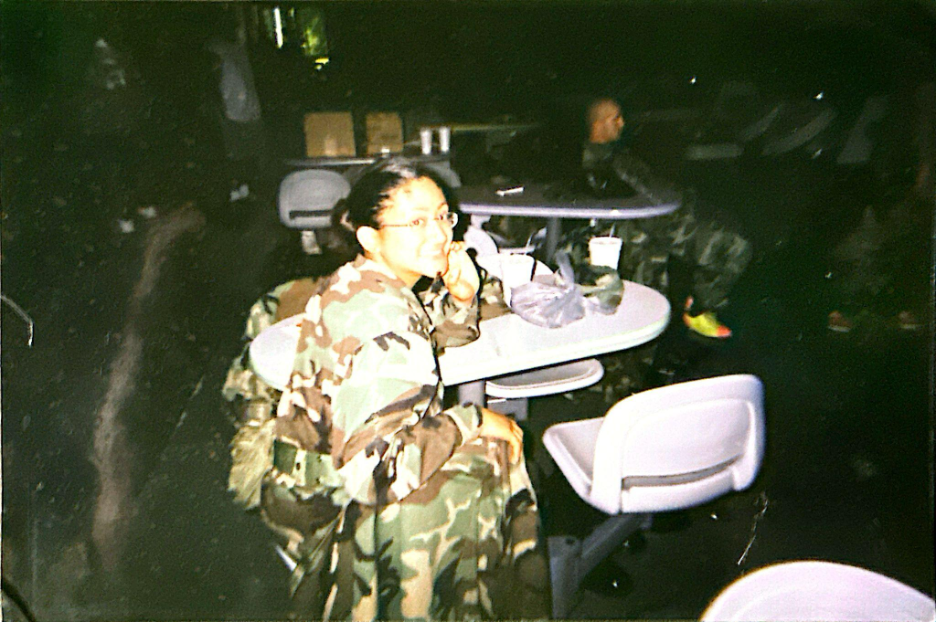
Outside the dining facility, being a cook sometimes made me feel less like a soldier than the person serving one. In the field, that changed as soon as cold troops smelled bacon and pancakes near the mobile kitchen. Men who had barely noticed us drifted closer. A plate of powdered eggs and hot food could raise morale faster than a speech.
German cooks taught me schnitzel and spaetzle. Soldiers from the American South showed me how long greens needed to sit with ham hocks before they tasted like somebody cared. The kitchen sounded more like the Bahrain of my childhood than the America I had left, full of accents and borrowed methods.
No one asked whether I was a citizen before accepting the plate. For those few minutes, belonging required no certificate. I had a place behind the line, and the food was hot.
The paper that would make it official came later.
The Second Oath
It came on September 27, 2005. Memory places the ceremony in Frankfurt; the certificate says Rome, Italy, a city I have never visited.
For years, I put the day in Munich. When I called my former husband, he remembered Frankfurt, and a photograph of the consulate brought back the gates. Even the person beside me had shifted in memory. I had called him my boyfriend. By then, we were already married.
We took the train. I wore civilian clothes because, off base, I rarely traveled in uniform. Soldiers had been told not to advertise ourselves in public, and blending in came easily to me.
The building returns more clearly than the room, its pale stone behind iron gates, cobblestones darkened by a gray day. I can see myself leaving. The interior remains almost blank.
I know I answered questions and raised my right hand. The oath survives as an action, not a sound. I cannot recover my own voice saying the words. No clear surge of patriotism arrives with the memory. Whatever I felt was quieter, or too distant from me to stay.
By then, I had worn the uniform for two and a half years. Citizenship had not been the reason I enlisted. I wanted distance from California and enough income to keep myself fed and housed. Service later opened a path through paperwork my parents were hiring a lawyer to navigate. I did not tell them I was going to be naturalized. The ceremony belonged to the life I was building elsewhere, not the family I had left behind.
Outside the consulate, Frankfurt was still Frankfurt. Trains moved beneath the fog while strangers continued with their day. Nothing in the street announced that the country I had served had finally named me one of its own.
Perhaps there was a moment when I thought, Now I am American. If it came, it passed too quickly to leave a mark.
What stayed was the certificate. Its date is exact. Its place of issuance remains a country away from my memory.
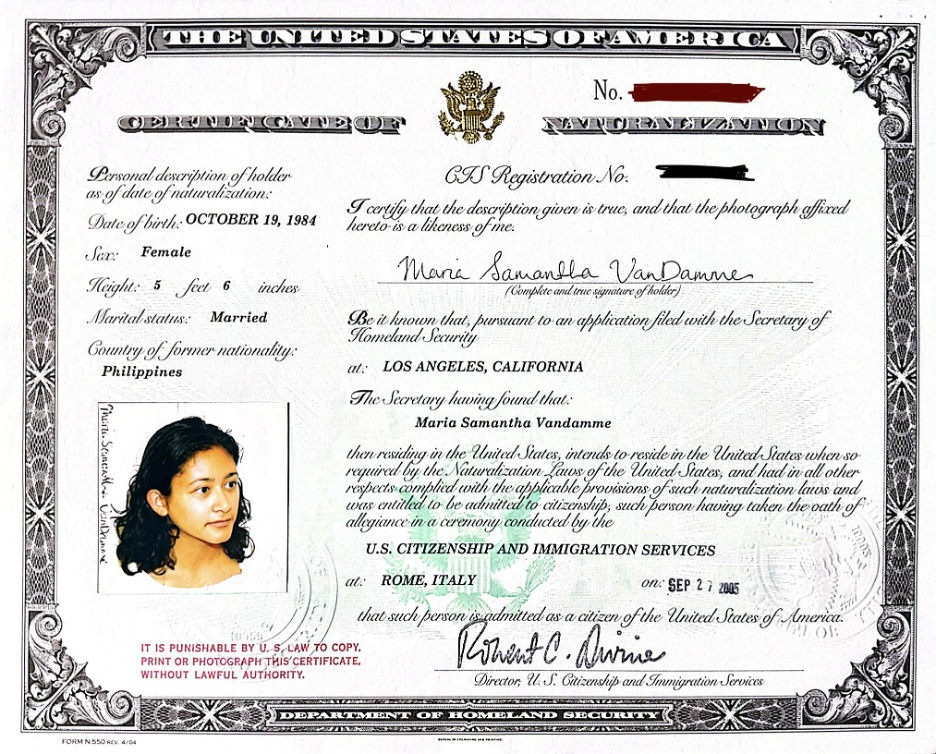
I carried it through the gates without effort.
Its weight would come later.
The Weight the Paper Gained
The certificate did not feel heavy when I carried it through the gates in Frankfurt. Its weight came slowly, as doors opened that the young woman on the train could not yet see.
I would later retrain as a signals intelligence analyst, serve in Afghanistan, earn degrees, and build a life she could not imagine while leaving the consulate. The paper rarely announced itself. It worked quietly, widening what became possible while asking nothing of my memory.
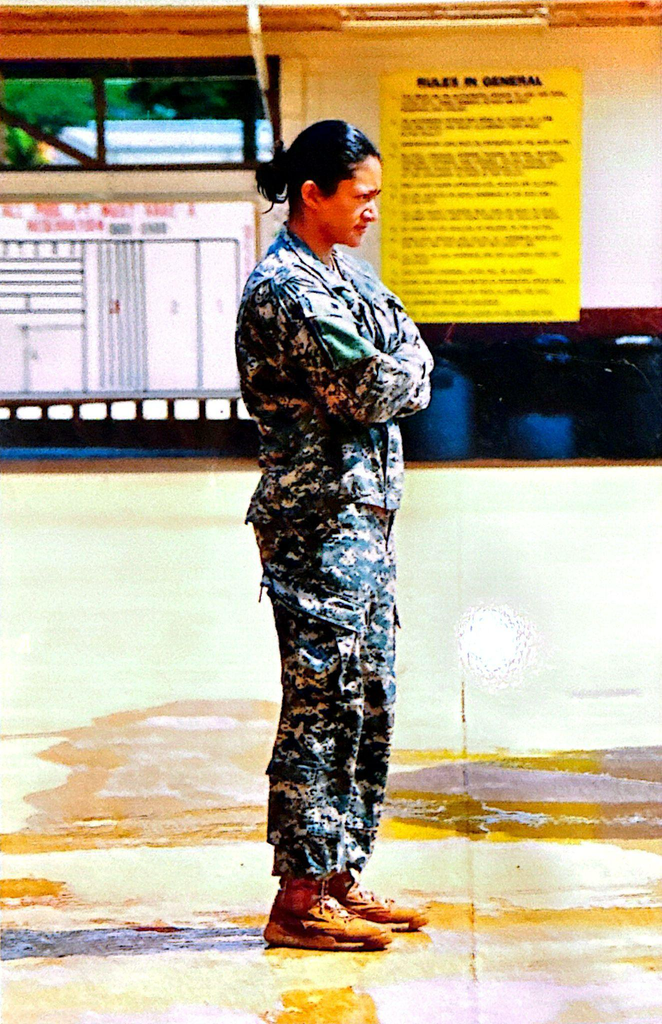
Now, when I look at photographs from Germany, I notice what she could not. She stands before old buildings with dark curls and sun-brown skin, able to blend into a city that is not hers. At first glance, she looks free. Something in her face remains far away.
Travel felt like proof that I had escaped. A train could carry me into another country before nightfall. I mistook motion for arrival because motion had saved me before.
Citizenship changed my legal life in an instant. Belonging did not move so quickly.
The certificate says Rome. My memory says Frankfurt. Between them is the truth I can hold: I served a country before it formally claimed me, and once it did, I kept searching for home in places no document could name.
The paper is still light enough to lift with one hand.
Only now do I understand what it carried.