Balikatan 2026 was Rehearsal for Defense of the Philippines, Paparo Says
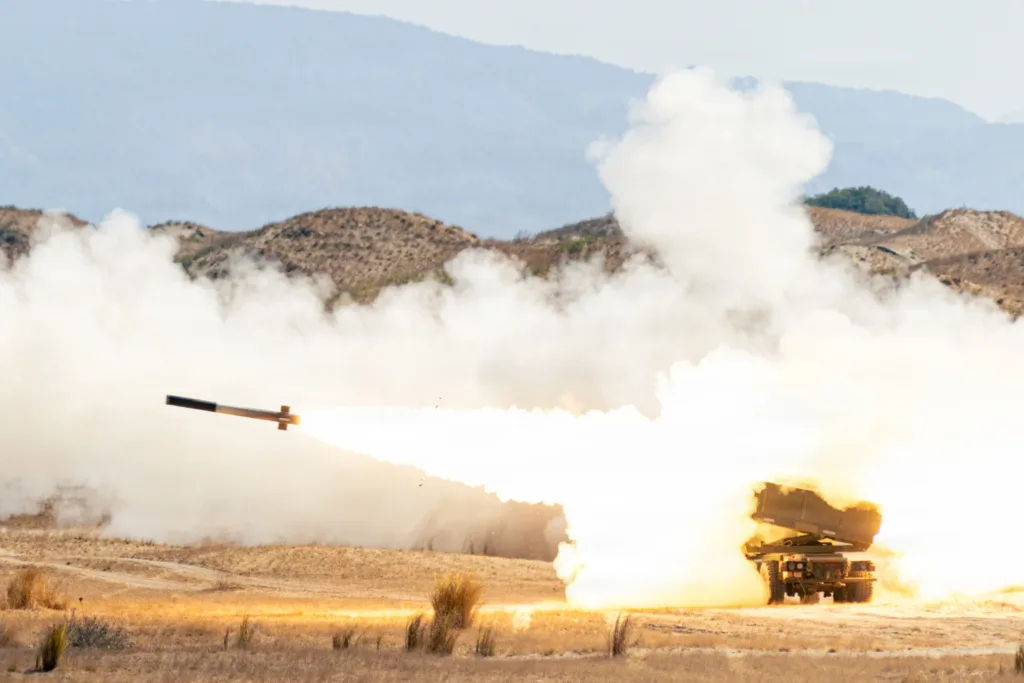
Balikatan 2026 was a rehearsal for the defense of the Philippines amid a “dangerous security environment,” U.S. Indo-Pacific Command chief Adm. Samuel Paparo said at the conclusion of the largest iteration of the drills held to date.
“Balikatan 2026 marks a strategic evolution from a bilateral exercise to a full-scale multinational mission rehearsal for the defense of the Republic of the Philippines. This growth reflects the dangerous security environment we live in, and it also requests the sovereign choices of partner nations,” Paparo said May 8 at Camp Aguinaldo, the headquarters of the Armed Forces of the Philippines, during the exercise’s closing ceremony.
Translating from Tagalog to “shoulder-to-shoulder,” Balikatan is a more than four-decade-old series of U.S.-Philippine-led military exercises that has expanded into a multinational combined joint force activity encompassing the majority of the Southeast Asian archipelago. For Balikatan 2026, the exercise brought in 17,000 troops – including 1,400 from first-time participant Japan – to train in the Philippines from April 20 to May 8.

This year’s drills included some of the most intensive American missile deployments across the Philippines since the departure of U.S. basing in 1992. In 2022, tensions with Beijing over territorial disputes in the South China Sea drove Philippine President BongBong Marcos’ administration to renew Manila’s defense and security cooperation with Washington.
The U.S. and the Philippines further oriented their focus to include the country’s northern reaches in the Luzon Strait due to concerns that a potential cross-strait conflict may impact territories near Taiwan and Filipino nationals working on the island.
“If something happens to Taiwan, inevitably we will be involved,” AFP Chief of Staff Brawner told Philippine troops assigned to the military’s northernmost command in a speech last year.
These priorities manifested various high-end military drills between the two countries covering area-denial, coastal defense and maritime strike activities since Balikatan 2023.
“This Balikatan had a series of watershed moments across the multinational joint force, and you all made clear that deterrence is our highest duty,” Paparo said. “In the north, in Batanes, 3rd Marine Littoral Regiment employed our precision capabilities during maritime key terrain seizure operations as part of sea denial and territorial defense. In the northern area, in Laoag, [the] U.S. Army’s 25th [Infantry Division] soldiers – with Filipino and Japanese soldiers – conducted counter landing fires.”

Aside from the high-profile coastal defense and ship sinking drills, Balikatan was preceded by a drastically different logistics build-up compared to previous iterations.
Past exercises moved equipment into ports facing the South China Sea, facilities that are exposed to Beijing’s People’s Liberation Army Southern Theater Command in the event of a conflict. However, planners for Balikatan 2026 shifted logistics south. Ports in Mindanao were used for the first time to stage equipment, which were then shipped toward Luzon and other exercise locations using commercial landing craft tank barges.
Additional exercises between specific branches of the U.S. and Philippine militaries, such as the Army-to-Army Salaknib, Marine Corps-to-Marine Corps KAMANDAG and Air Force-to-Air Force Cope Thunder, further reinforced the integration of the two forces in recent years. Like Balikatan, these smaller drills are increasingly geared toward protecting Northern Luzon.
Paparo also said the 1st Multi-Domain Task Force validated its “precision lethal capabilities,” referring to the launch of a Tomahawk cruise missile from the Army’s Mid-Range Capability that struck a target 390 miles away. The ground-based Mark 41 vertical launching system was procured by the service for long-range and maritime strike missions required by American forces in the Indo-Pacific.
INDOPACOM’s Mission Network at Balikatan 2026

Paparo highlighted the integration of the combatant command’s specially designed command and control network into Balikatan 2026’s activities, which he said enabled American and partner forces to securely coordinate. Dubbed Mission Network, the system was originally requested by INDOPACOM to fulfill a requirement for a secure communications network to tie together the various militaries, agencies and other parties in the Pacific region.
The network was used from new combined coordination centers throughout the Philippines – facilities funded by the U.S. through programs such as the Pacific Deterrence Initiative – to host combined teams of American and Filipino command staff throughout the exercise.

“We’re very excited about it,” Paparo said of the new mission network. “You can expect to see future Balikatan exercises led from there through coalition combined command centers, conferring unity of effort across the multinational force.”
According to SOS International LLC, the American defense contractor responsible for the creation of the INDOPACOM Mission Network, the virtual solution is “ the largest data-centric, zero trust information domain in operation within the Department of Defense.”
Bringing Philippine forces into the fold with information sharing and command and control has been a key priority of American planners due to the AFP’s recent shift from internal security operations to territorial defense against adversaries like China. Recent intelligence pacts and American investments aim to bring the Philippine military up to a standard to sufficiently communicate with each other as well as their U.S. partners.