Shipping Industry Uncertain As Hormuz Crisis Carries On
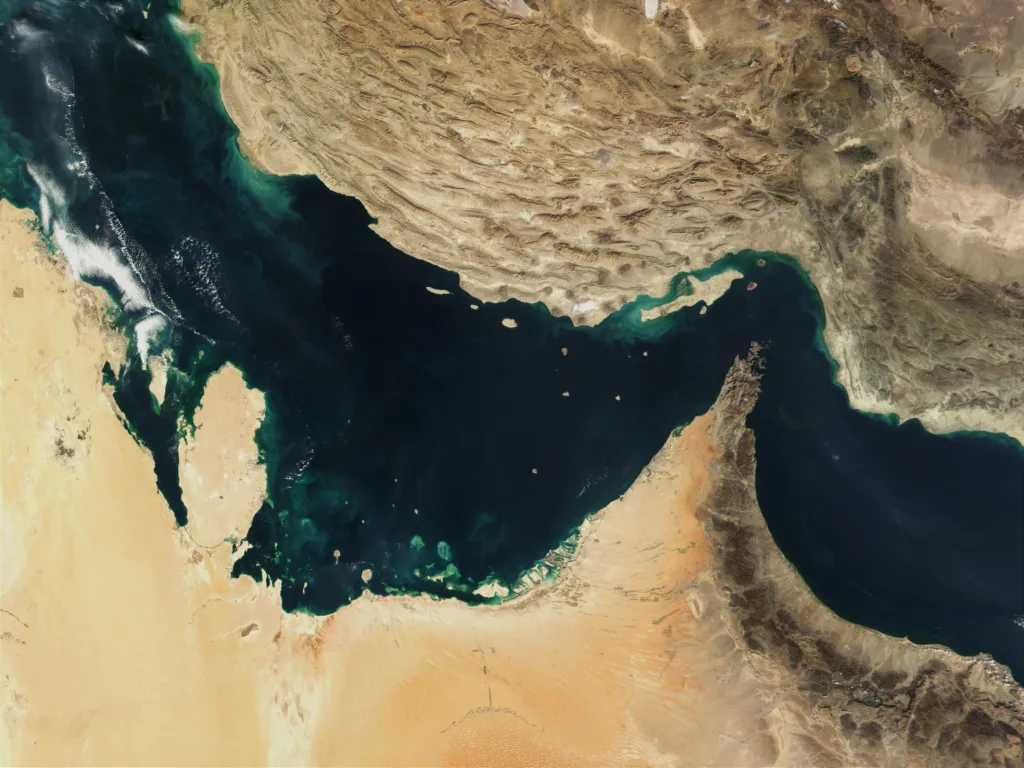
President Donald Trump announced Friday that the U.S. could open the Strait of Hormuz with “a little more time” as the president continues to adjust his messaging on the passageway between the Persian Gulf and the Arabian Sea.
Since the U.S.-Israel offensive in Iran began on Feb. 28, the Trump administration has not carried out a plan to open the Strait of Hormuz, the waterway through which a fifth of the world’s oil flows. While the president talked Friday of opening the strait, on Tuesday, Defense Secretary Pete Hegseth put the onus on other countries to help commercial ships stuck in the Persian Gulf. Trump has also said the U.S. does not need the strait, although roughly 9 percent of petroleum comes from Gulf states, USNI News previously reported.
The absence of safe passage for merchant vessels has led to uncertainty among the shipping industry, Cichen Shen, the Asia Pacific editor with shipping analysis Lloyd’s List, said during a Thursday webinar.
“For the shipping industry and many others, we are still left planning around an open-ended conflict with no visible off road, and that uncertainty is arguably as damaging as the disruption itself,” Shen said.
Ukrainian President Volodymyr Zelensky told News Nation that Ukraine would be willing to help countries seeking to open or transit the strait. The country set up the Black Sea Grain Corridor between Ukraine and Russia during the height of the Russo-Ukraine War.
The United Kingdom and 39 other countries held talks Thursday about how to pressure Iran into opening the strait. The United States was not part of the talks, according to The Associated Press. The U.K. and France have been leading discussions on how to escort ships once the war is over.
Malta-flagged container ship CMA CGM Kribi, owned by French company CMA CGM, passed through the strait on Friday using the Islamic Revolutionary Guard Corps’ tollbooth, which sends ships around Iran’s Larak Island before they can exit the strait, according to Lloyd’s List. Sohar LNG, a liquified natural gas carrier, co-owned by Japanese company Mitsui OSK, was the first to exit the strait, making the transit on Friday.
Three Omani ships transited the strait without using the IRGC tollbooth, the first traceable ships to do so since March 15, according to a Friday media briefing from Lloyd’s List Intelligence.
Cargo vessel transits were up on Wednesday, according to the Thursday advisory from the Joint Maritime Information Center, an information service created by the Combined Maritime Forces. There were nine cargo vessels – one westbound and eight eastbound – to sail through the strait on Wednesday compared to three the day before. However, tanker transits still remain low with three on Wednesday. JMIC does not track tankers that are part of the “shadow fleet,” which use deceptive measures to avoid identification.
Typical traffic is 138 vessels a day, according to JMIC.
Since March 1, Lloyd’s List Intelligence tracked 221 transits, the majority of which were eastbound, or out of the strait. There were 74 bulk carriers, 50 crude oil tankers, 37 product tankers, 25 containerships and 24 gas carriers. Lloyd’s List Intelligence tracks “shadow fleet” and dark transits as well as traceable ones.
Of the transits, 145 were traceable, while 76 ships went through without their AIS on.
The majority of ships sailing – 23 percent – through have an Iranian flag or ownership. Greek-ownership or flag is next highest at 17 percent with Chinese at 10 percent. Approximately 73 percent of all traffic has some sort of link to Iran.
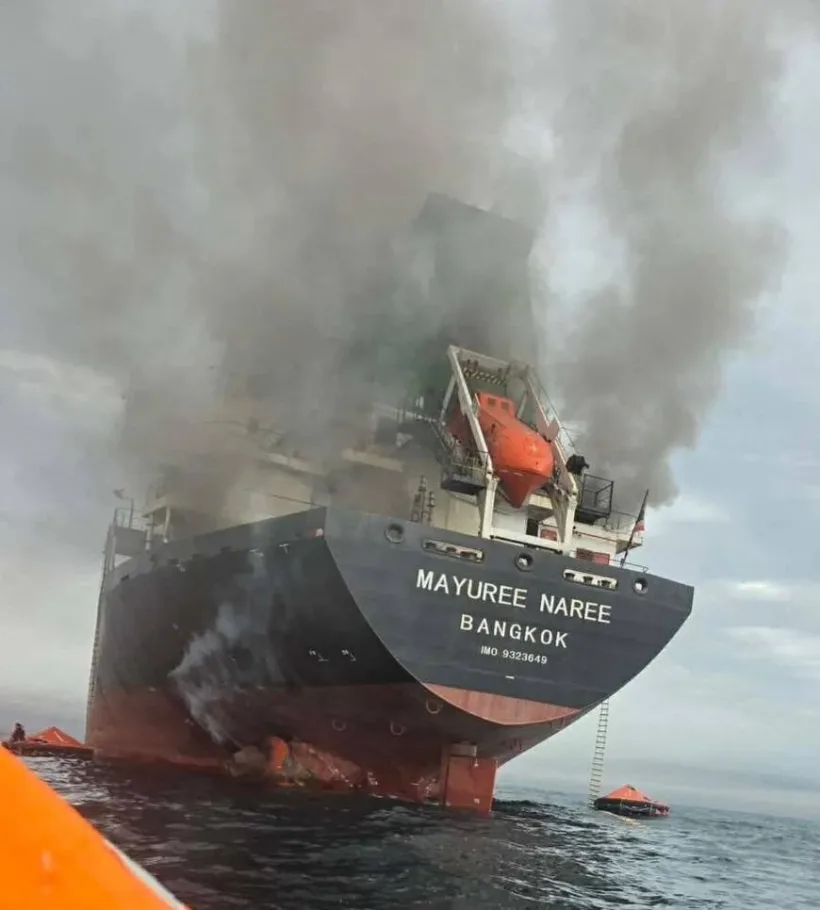
Since Feb. 28 when the U.S.-Israeli war with Iran began, 28 commercial vessels have been hit with or were affected by projectiles.
The 28 ships that have been hit or affected by projectiles are:
- Sanctioned ship Skylight, near Kumzar, Oman
- MT MKD VYOM, near Muscat, Oman
- MT Hercules Star, near Mina Saqr, UAE
- MV Ocean Electra, near Sharjah, UAE
- MT Stena Imperative, in port in Bahrain
- MV Gold Oak, near Fujairah, UAE
- MT Libra Trader, near Fujairah
- MV Pelagia, in the Gulf of Oman
- MV Safeen Prestige, near Oman while transiting the strait
- MT MSC Grace, near Dubai, UAE
- MT Sonangol Namibe, near Mubarak Al Kabeer, Kuwait
- Tug Mussafah 2, assisting Safeen Prestige, near Oman
- Oil rig Arabia III, near Al Jubayl, Saudi Arabia
- MV GH Kahlo, near Abu Dhabi
- MV Mayuree Naaree, in the strait, north of Oman
- MV ONE Majesty, near Ra’s al Khaymah, UAE
- MV Star Gwyenth, northwest of Dubai
- MT Zefyros, off the coast of Al Basrah, Iraq
- MT Safesea Vishnu, off the coast of Al Basrah
- MV Source Blessing, north of Jebel Ali, UAE
- MT Gas Al Ahmadiah, off the coast of Fujairah
- MT Parimal, off of Khor Fakkan
- Offshore tug Halul 50, off the coast of Ras Laffan, Qatar
- MV Ocean Pretty, in the Strait of Hormuz
- MV Sunny 77, off of Duqm, Oman
- MV Express Rome, off of Ras Laffan
- MT Al Salmi, off of UAE
- MT Aqua 1, off of Ras Laffan
There are at least 10 seafarer fatalities – one from Safesea Vishnu, four from Mussafah 2, one on MKD Vyom and one on Skylight. Three mariners from Mayuree Naaree were declared dead after search and rescue efforts ended, and a seafarer is missing from Skylight. There have been multiple injuries reported, according to the International Maritime Organization. The master of Parimal is missing, according to Lloyd’s List Intelligence.
Stress among seafarers has risen as the uncertainty of the strait continues, Robert Willmington, markets editor for Lloyd’s List, said during the Thursday webinar. Anxiety and suicide ideation are among concerns.
When the U.S.-Israel strikes began, there were about 19,000 seafarers stuck due to the blockage in the strait. This included some cruise ship crew, Willmington said.
“We can see that crews on merchant shipping who were just going about doing the day-to-day work are becoming collateral damage because of this crisis,” he said.
About 20 percent of the world’s oil flows through strait. Brent crude oil price continues to climb and was at $127.61 a barrel as of Friday, according to the Energy Information Administration, one of the highest prices so far in the conflict. The Brent crude oil price was $71.32 on Feb. 27, the day before the U.S.-Israel offensive in Iran.