Houthis Make Moves On Red Sea, U.S., Iran Go Tanker for Warship
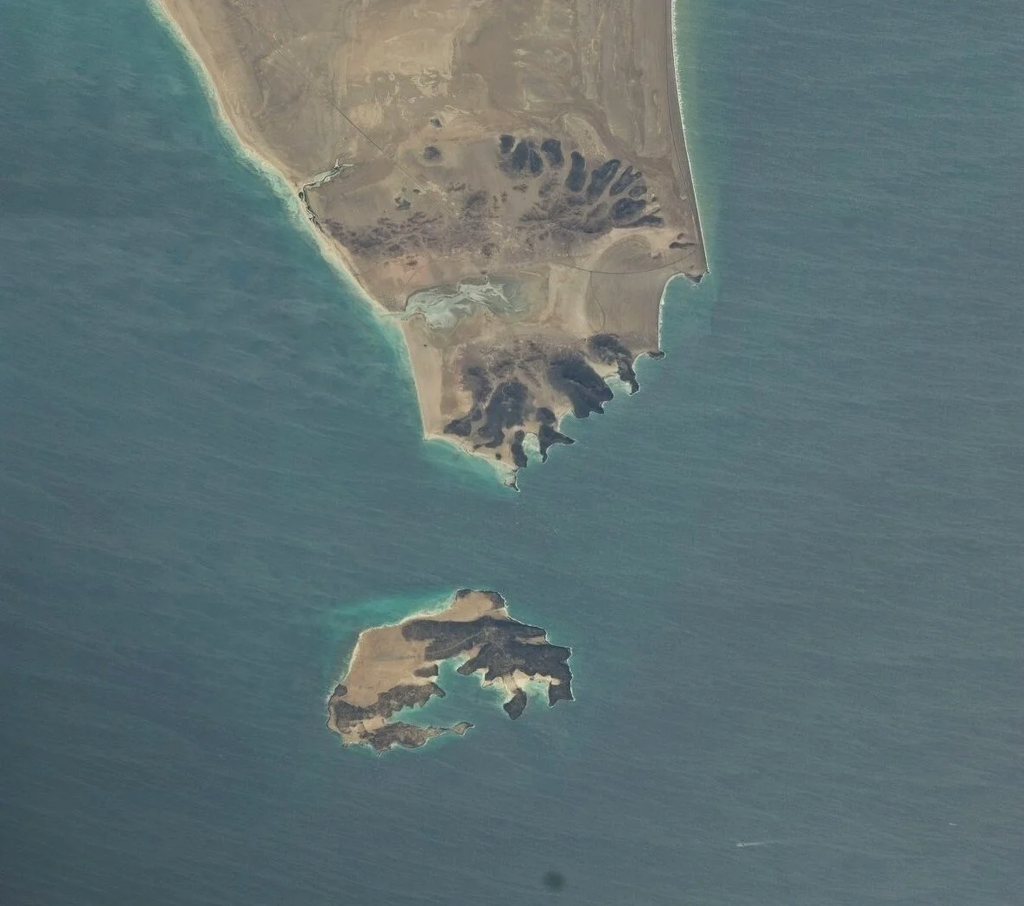
The Houthis in Yemen have seized Perim Island, a parcel of land that lies in the Red Sea in an amphibious assault, giving the Iranian-backed group a strategic foothold over the Bab el-Mandeb.
The Houthis’ push this week – first taking Mocha on the Red Sea’s North Coast, then Perim Island – coincides with escalating tensions between Iran and the U.S., with Washington establishing that for any warship to come under attack, it will strike an Iranian tanker.
It is not immediately clear what the Houthis’ movement will mean for the ongoing U.S.-Iran war.
The Yemini group shut down shipping in the Red Sea between late 2023 to 2025 in solidarity with Palestine. The U.S. launched campaigns under the Biden and Trump administrations, with the Trump administration entering a ceasefire in 2026 with the Houthis, although the Yemen-based group continued to hit non-U.S.-linked ships.
The Houthis have not announced a resumption of their Red Sea campaign in support of Iran, raising questions of whether Iran wanted its proxy to hold off or if there was a schism between the Houthis and Iran.
The group has also not resumed a total maritime campaign in the Red Sea, instead announcing on July 20 that it would enact a maritime blockade against Saudi Arabia.
The Houthis have attacked Saudi-flagged ships and other vessels linked to Saudi Arabia since enacting the maritime blockade, according to maritime analysis site Windward, which tracks attacks on ships. On Aug. 11, the Houthis claimed an attack on MV Tihamah (IMO: 1031329), a cargo ship sailing under a Tanzanian flag, that killed three crew members. Two Yemeni rescuers also died, Reuters reported.
The Houthis’ new strategic position could cause trouble for the Saudi Yanbu pipeline, which has been allowing more Saudi oil to flow. As of Sept. 10, Yanbu crude exports were at more than 4 million barrels per day with more than 70 percent of the volume going toward the Suez Canal or the SuMed pipeline, according to Lloyd’s List.
The Saudi Ministry of Energy announced Friday that it suspended its East-West oil pipeline out of precaution.
However, the Houthis were able to shut down shipping in the Red Sea in the past without having positions in Mocha or Perim Island, Campbell University professor Sal Mercogliano posted on social media site X.
The Houthis have said their maritime blockade only targets Saudi Arabia but other ships are free to pass through the Bab el-Mandeb, Lloyd’s List reported. So far, shipping continues to flow at a reduced rate through the chokepoint, Mercogliano posted.
Ok, So About Hormuz?

Meanwhile, the other strategic chokepoint in the Middle East continues to see transits fall in the first week of September, according to Lloyd’s List Intelligence data.
Transits were down 13.8 percent between Aug. 31 and Sunday compared to the previous week, although that gap could tighten as Lloyd’s List Intelligence analysts identify ships that made dark transits.
August saw a post-conflict high of non-Iranian-linked transits in the strait, according to Lloyd’s List Intelligence. Of the 345 non-Iranian-linked transits, 191 were westbound transits.
The August non-Iranian-linked transits were driven by crude oil tankers.
But in the past 10 days, the U.S. and Iran have entered into a strike-for-strike pattern. Iran has attempted to hit multiple U.S. warships, U.S. Central Command recently announced. In response, the U.S. attacked Iranian-affiliated tankers. According to a Wednesday CENTCOM post, the U.S. has now destroyed 10 Iranian tankers in response to attempted attacks on U.S. warships.

The U.S. hit a new milestone in the attacks on Iranian-linked tankers, Mercogliano said during Lloyd’s List’s Thursday webinar. Of the five tankers attacked by the U.S. were two of the largest ships Washington has sunk since World War II, he said.
“This is definitely an escalation,” Mercogliano said. “There’s no way you cannot see this as anything but, and I think in terms of operations in the Gulf of Oman, the ship-to-ship transfer, there has to be concern that this is going to spill over them and further disrupt the amount of oil that is coming out of the Persian Gulf.”
The Consultative Shipping Group, an informal cooperation between Belgium, Canada, Denmark, Finland, France, Germany, Greece, Italy, Japan, the Republic of Korea, the Netherlands, Norway, Poland, Portugal, Singapore, Spain, Sweden and the United Kingdom, raised warnings this week about the state of global shipping as a result of the crises in the Red Sea and Strait of Hormuz, as well as the ongoing shipping attacks in the Black and Mediterranean seas as part of the Russo-Ukraine War.
“We call on all maritime nations to actively support and uphold the core principles governing shipping, from freedom of navigation to the international legal frameworks governed by multilateral institutions such as the IMO. We commit to work together to ensure a level playing field by applying rules more consistently and transparently across global shipping,” reads the CSG letter.