Final Bill for Inactivating, Scrapping Carrier Enterprise Now at $1.3B
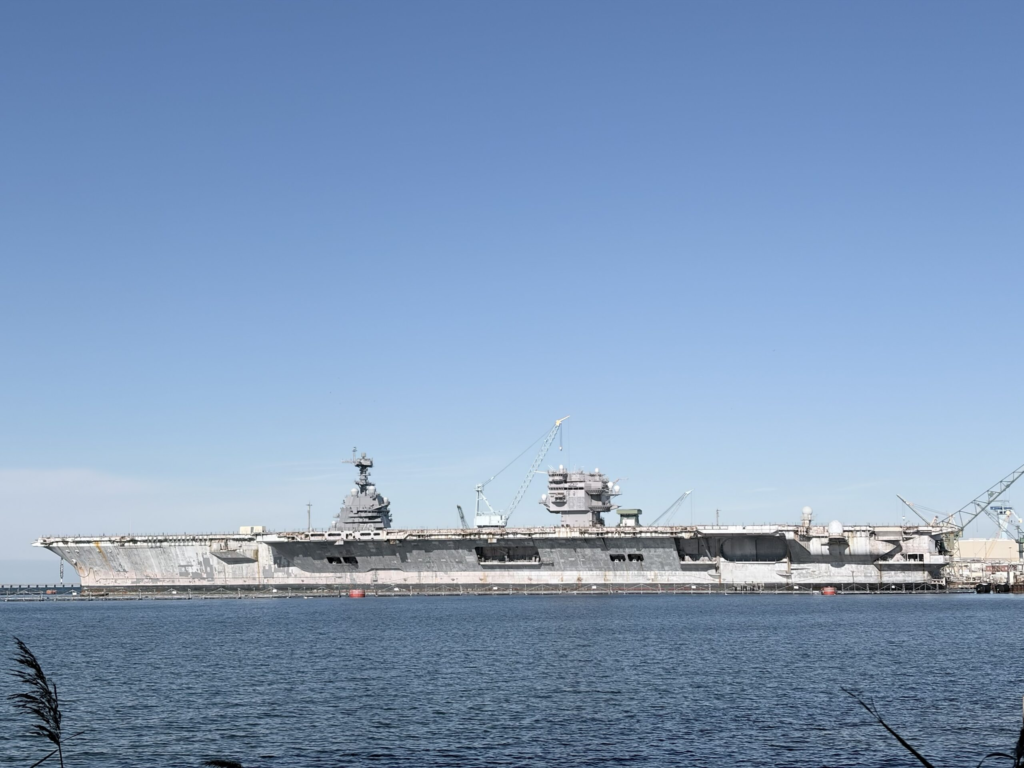
Scrapping “Big E” is costing big bucks. Recycling the Navy’s first nuclear aircraft carrier has cost the branch about $1.3 billion since the former USS Enterprise (CVN-65) was removed from active service in 2012.
Earlier this month, NorthStar Maritime Dismantlement Services was awarded a $418.5 million contract for the disposal of the former 95,000-ton aircraft carrier. NorthStar Maritime will tow the hulk from Pier 2 at Newport News Shipbuilding to Mobile, Ala., for the final dismantling near the hulk of the famed ocean liner S.S. United States. The NorthStar contract follows $902 million for the initial activation for Enterprise and $111 million for storage, according to a statement from PAE Maritime provided to USNI News.
The price to remove the remaining nuclear fuel, store and safely dispose of Enterprise has spread over the 14 years since the carrier returned from its last deployment. Enterprise’s bill is a preview of the cost the Navy will bear when USS Nimitz (CVN-68) leaves service in 2027 ahead of the entire class of nuclear powered carriers.
“It’s a task that touches stakeholders across Naval Sea Systems Command, Naval Reactors and the Departments of Navy, Defense, and Energy – and one that carries with it an opportunity to leverage the expertise and capacity of the industrial base to augment the capacity of the Nation’s public shipyards,” Rear Adm. Casey Moten, the Navy’s officer who oversees the aircraft carrier program, said in a statement in 2024 during the standup of the Nuclear-Powered Aircraft Carrier Inactivation and Disposal Program Office (PMS 368).
The complications of defueling Enterprise’s eight nuclear reactors was a major barrier to recycling the carrier, Bryan Clark with the Hudson Institute told USNI News.
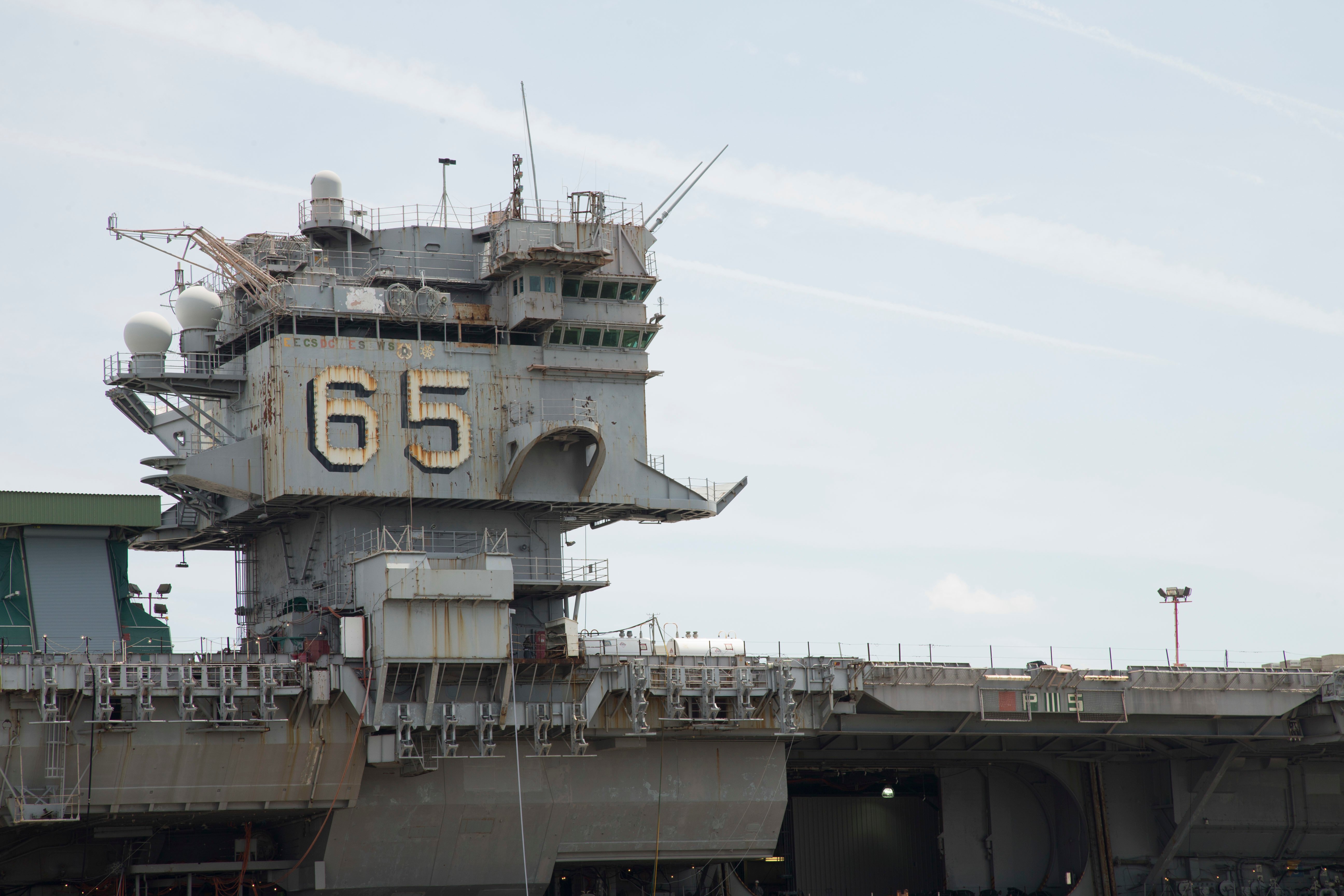
“For submarines, you remove the reactor compartment as an entire section and ship it off to a disposal site,” he told USNI News. “That’s difficult enough, but it’s straightforward. Here, the reactor compartment is too big, so you have to disassemble the hull itself.”
While the reactors are now defueled, they still have to be removed and properly disposed of at a Department of Energy site in Hanford, Wash., where the Navy’s spent reactors are housed. That involves dealing with the low-level radiation of the compartments resident on the hull, according to the environmental assessment published in 2023. The process is expected to last into 2030.
The new contract award to NorthStar comes as the Navy weighs the disposal process for the Nimitz-class.
“We’re creating a blueprint for the Navy on how to dispose of them,” PMS 386 commander Capt. William Cleveland said in the 2024 statement. “It’s exciting work that will shape standards across the Navy’s nuclear enterprise.”
Nimitz is set to leave active service in 2027. HII Newport News received a $96 million contract in March for advanced planning and long lead materials.