Hormuz Sees Traffic Bump Despite Ongoing Iranian Attacks
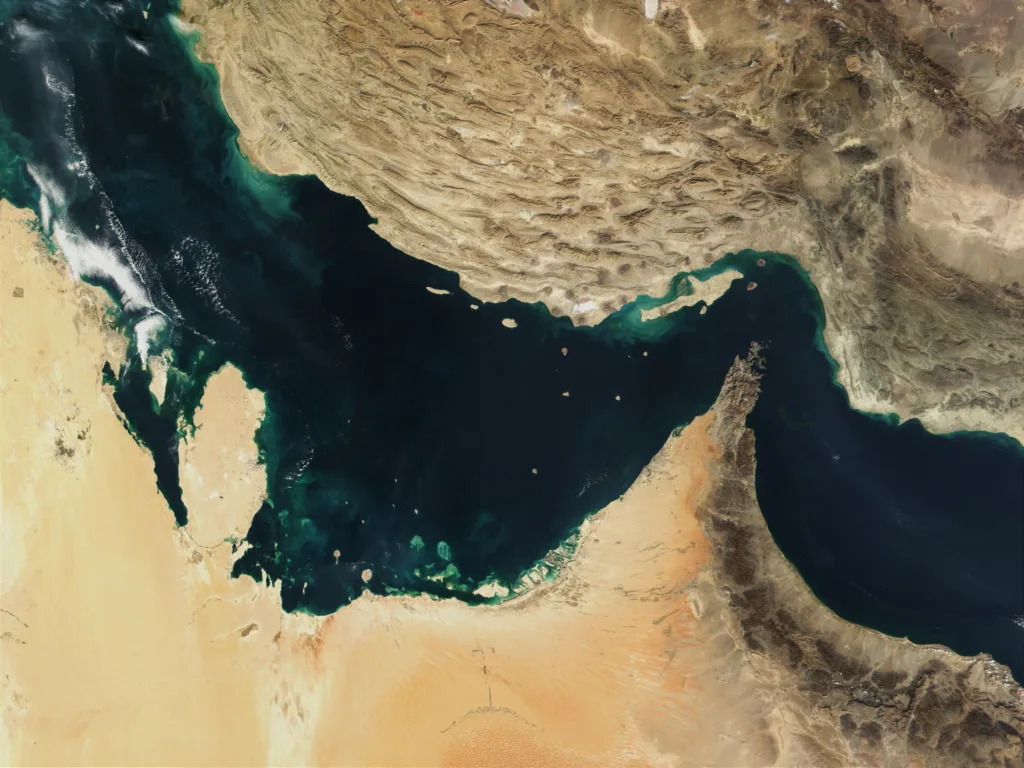
Transits through the Strait of Hormuz more than doubled between May and June, as the shipping industry attempts to navigate the volatile waterway. Analysts with London-based Lloyd’s List Intelligence tracked at least 576 transits through the strait in June, up from 233 in May. However, strait transits are still largely down compared to the year before, in which June 2025 saw 3,131 transits, according to Lloyd’s List Intelligence data.
About 70 percent of June’s transits were made by non-Iranian ships.
The Strait of Hormuz saw a mass exodus of ships that were stuck in the Persian Gulf following the June 17 announcement of a 60-day ceasefire between Iran and the U.S. However, there are still roughly 6,000 seafarers stranded, International Maritime Organization Secretary-General Arsenio Dominguez said in a Wednesday statement.
When the hostilities began on Feb. 28, there were roughly 20,000 seafarers stranded.
USNI News tracked at least 58 attacks on vessels by both the U.S. and Iran since hostilities began Feb. 28. There have also been at least two ships that reported near misses with projectiles.
Lloyd’s List Intelligence tracked 579 transits between June 18 and July 5, although numbers could be higher as more ships reappear after turning off their automatic identification systems to make transits. Of the 579, 333 were eastbound.
Despite the high number of transits, current traffic represents just 80 percent of the pre-war flow, Lloyd’s List Intelligence analyst Bridget Diakun said during a Thursday webinar.
Lloyd’s List Intelligence tracked 24 non-Iranian transits on Tuesday, with ships electing to use both the U.S. suggested route that takes ships closer to Oman and the Iranian route, which requires permission from Iran’s Persian Gulf Strait Authority.
Traffic levels since the ceasefire do not yet represent the new normal for the Strait of Hormuz, Lloyd’s List editor-in-chief Richard Meade said.
Transits have continued in recent weeks despite five Iranian attacks on commercial ships since Iran and the U.S. signed a memorandum of understanding that led to the U.S. dropping its blockade of Iranian ports. The U.S. Central Command forces struck Iran in retaliation – the most recent on Wednesday – with President Donald Trump declaring the ceasefire was over Friday after the Iranian attack on MT Cyprus Prosperity (IMO 9595216) and subsequent U.S. strikes on Iran.
Four of the attacks were on ships off the coast of Oman, while one was off the coast of the United Arab Emirates, according to the IMO.
It was a small surprise that the transits did not drop following the Iranian attacks, Diakun said during a July 2 webinar.
“I thought ships were going to pull back, but they kind of kept up that pressure, which I think is interesting, and similarly, we kind of saw that [in the] Red Sea. Once people started pushing back in, even though the situation didn’t change – we had ceasefires collapse – but people didn’t just immediately go back,” she said.
Diakun is predicting transits will slow over the next week as the shipping industry adapts to the current situation. Going forth, she expects traffic volumes will ebb and flow.
Diakun said she did not expect to see the increased volume of westbound transits, which would bring ships into the Persian Gulf.
The strait is in a better place than it was in March and April, Andrew Wilson, Head of Research and Consultancy Services at BRS Shipbrokers, said during the Thursday webinar.
“But until we have some sort of substantial agreement, also involving all of the partners within the gulf that everyone can agree on, it’s just going to be very, very volatile,” Wilson said.