Soldier who shielded Jewish POWs from guards will receive Medal of Honor
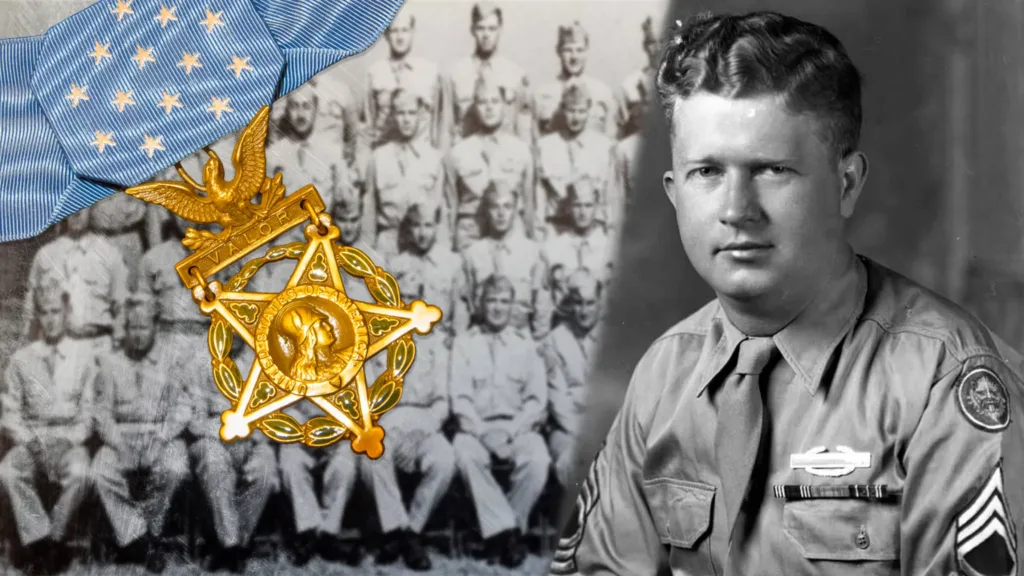
Roddie Edmonds never spoke about his time in a German prisoner of war camp. This week, his family learned he’ll soon receive the nation’s highest valor award for an act of heroism in which he never fired a shot.
A master sergeant thrust into command of 1,200 POWs in a German camp, Edmonds will be posthumously awarded the Medal of Honor, his family confirmed to Task & Purpose. The award honors a moment, not of direct combat action, but of Edmonds’ refusal to identify Jewish soldiers in the camp, instead daring a German commander to execute him.
Ordered by the camp commander to hand over the Jewish soldiers under his command, Edmonds instead called a full formation of American prisoners and declared, “We are all Jews.”
The German major pulled his Luger pistol and held it to Edmonds’ head, threatening to shoot him on the spot if he did not call the Jewish troops forward.
Edmonds held his ground.
“Major, you can shoot me, you can shoot all of us, but we know who you are,” he replied, according to a noncommissioned officer who stood beside him during the confrontation — and who, unknown to the Germans, was himself Jewish. “This war is almost over and you’ll be a war criminal.”
The German officer put his pistol away and left. The camp authorities never again tried to segregate the Americans.
Edmonds died in 1985 in his hometown of Knoxville, Tennessee. According to his son, Christopher Edmonds, he never told his family about his time as the ranking NCO for over 100 days in the camp, which was called Stalag IX-A.
But the men who came home because of him never forgot him.
“Roddie was incredible,” said Paul Stern, one of four Jewish senior NCOs inside Stalag IX-A who told his story in interviews and a 2016 documentary. “He never really got his recognition except among us.”
A story untold for 40 years
Christopher Edmonds told Task & Purpose that President Donald Trump called him on Feb. 3 to confirm that his father would posthumously receive the Medal of Honor. An official at the White House also confirmed the Medal had been approved.
Edmonds joins roughly a dozen Medal of Honor recipients recognized for resistance in prison camps. In the Korean War, Army medic Tibor Rubin, a Holocaust survivor, kept at least 40 POWs alive while in captivity. In Vietnam, Army Captain Humbert “Rocky” Versace, Air Force Captain Lance Sijan and Navy Admiral James Stockdale all received the Medal for fierce resistance and escape attempts.
Christopher Edmonds only learned of his father’s role at Stalag IX-A after his death. Christopher’s mother, Mary Ann, gave him his father’s diary, which he’d kept in the camp. After his daughter used the diary for a school project, contacting some of the men listed in it, Edmonds began to recognize what his father had done. He began traveling across the country to meet many of the men who had been in Stalag IX-A.
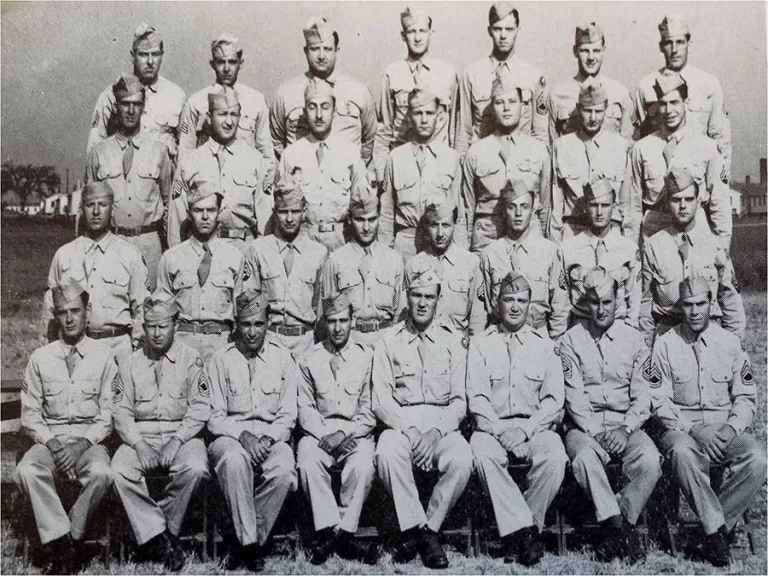
The Jewish soldiers he met said they owed their lives to Roddie’s bravery.
In 2015, Edmonds’ heroism was recognized by the nation of Israel with one of its highest awards. Yad Vashem, Israel’s World Holocaust Remembrance Center in Jerusalem, named Edmonds among “The Righteous Among The Nations,” a title for individuals who “mustered extraordinary courage to uphold human values, risking their lives to save Jews” during the Holocaust.
Edmonds is one of just five Americans to receive the title.
Final days of a lost war
Edmonds was one of 20,000 soldiers taken prisoner during the Battle of the Bulge. American soldiers were deeply aware of the danger Jewish soldiers faced in captivity. Jews were told to break or lose their dog tags, which were marked with an “H” for Hebrew.
In the 2016 documentary, another Jewish senior NCO in Stalag IXB, Lester Tannenbaum, recalled how Edmonds was suddenly in charge of Americans from many backgrounds.
“He grew up in Knoxville, Tennessee,” Tannenbaum said with a laugh. “He probably never met a Jew in Knoxville.”
In an initial POW camp, the Germans segregated Jewish GIs into “a prison within the prison,” according to Tannebaum. About 350 junior enlisted Jewish soldiers were sent to the Berga concentration camp, where at least 70 died under conditions of slave labor.
The Germans again attempted to separate Jews when the soldiers arrived at XI-A in January 1945. The camp commander ordered Edmonds to call a morning formation of only Jewish soldiers.
“Roddie was in complete command,” Tannenbaum, who died in 2023 at 99, said in the film. “He said we’re not gonna do that. We’re gonna fall out like we do every morning.”
Three months later, Edmonds again stood his ground in a showdown with Nazi guards when they ordered the POWs to evacuate the camp, likely into a death march.
Edmonds told his men to refuse. If guards forced them out of one barracks, he said, they should run back in as soon as the guards turned to other barracks.
“Finally, they gave up,” said Tannenbaum. “They marched out and left us alone.”