Brigadier General John Taliaferro Thompson graduated from the United States Military Academy in 1882. As a second lieutenant, he served in the 2nd Artillery before attending engineering and artillery schools and being transferred to the Army’s Ordnance Department in 1890, where he spent his military career. During World War I, the need for increasingly effective small arms inspired Thompson to combine his vision with the powerful .45 ACP, creating the Thompson submachine gun (SMG) in 1919, three years after founding the Auto-Ordnance Corporation.
With World War I ending a year earlier, sales of the Thompson SMG leaned its distinction as the first commercially marketed “submachine gun.” According to an agreement between Auto Ordnance and Colt Patent Fire-Arms Manufacturing Company, 15,000 Model 1921 Thompsons were produced in 1921 and 1922, cementing the Thompson submachine gun’s notoriety during the Prohibition era as a favored tool of lawmen and criminals while earning the moniker “Tommy Gun.”
World War II increased demand for the Thompson with Auto-Ordnance and licensed partners producing large quantities to supply U.S. and Allied forces. The submachine gun has since become a staple of close-quarters combat, and the Tommy Gun’s legacy continues to thrive after Kahr Arms’ acquisition in 1999, leaving an indelible mark on 20th-century history. That’s why I was honored when Auto Ordnance asked me to review. Wait… TAO50? A bolt-action .50 caliber sniper rifle?
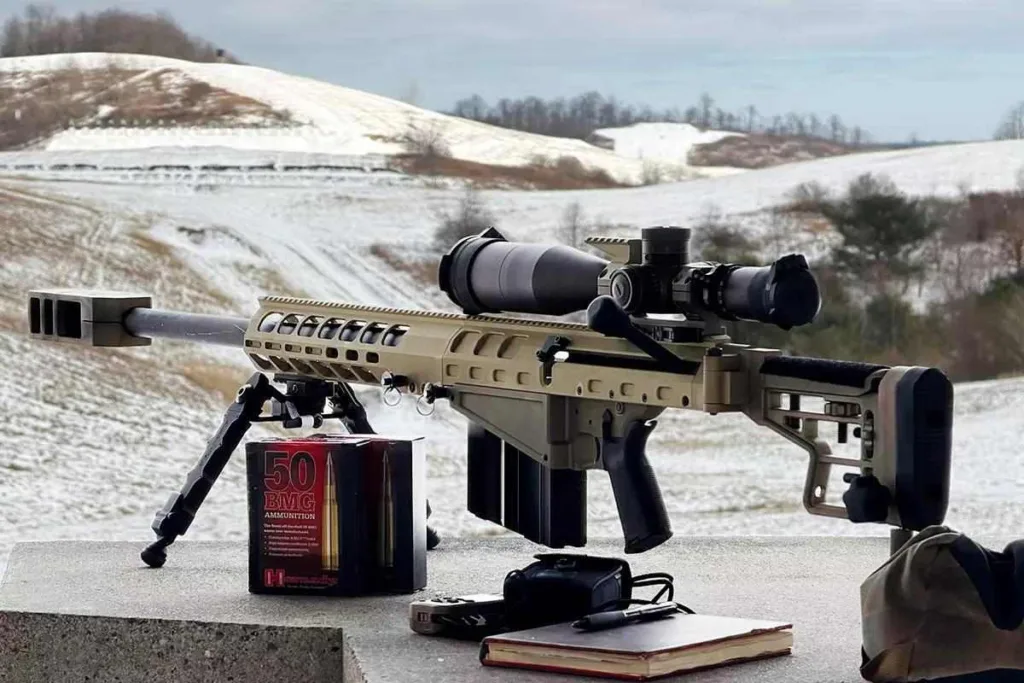
The .50 BMG is a milestone on the bucket list of just about every shooter, most of whom don’t know where they’ll unleash one of these. With .50 caliber rounds looking more like hand grenades, I only get behind rifles I trust, and I knew Auto-Ordnance would not let me down.
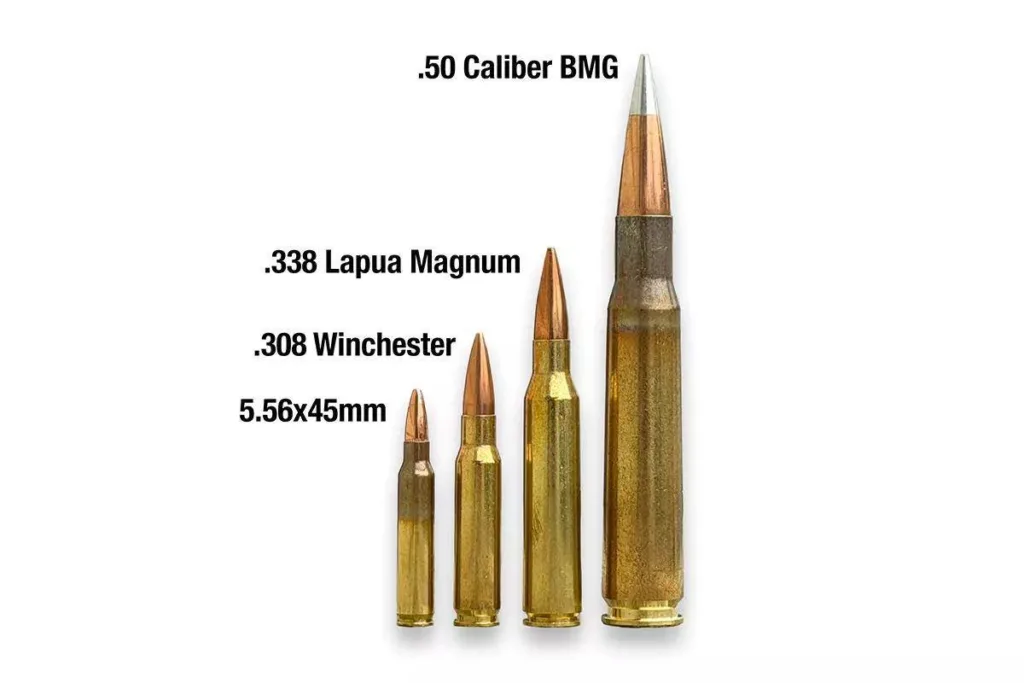
.50 BMG History
Few cartridges in firearms history wield the battlefield authority of a .50 caliber, from the roar of a Browning M2 machine gun to the sniper, able to stop an engine block from more than a mile away. However, .50-caliber history did not take root in a machine shop or military arsenal, but on the American frontier.
Early .50s appeared just after the Civil War, when black-powder cartridges like the .50-70 Government and .50-90 Sharps became popular among soldiers and buffalo hunters. These half-inch projectiles carried more terminal energy at greater distances, but early applications would not meet modern precision standards. In World War I, demands for a cartridge capable of defeating tank and aircraft armor at longer ranges prompted John Moses Browning to develop the Browning M2 .50 Caliber Heavy Machine Gun, known as Ma Deuce, which was adopted in 1921 and has since become a permanent fixture in global conflict.
The .50 BMG, or 12.7x99mm NATO, spent most of the 20th century demonstrating belt-fed supremacy. In 1967, however, during Vietnam, legendary Marine Scout Sniper Carlos Hathcock mounted a scope to a Browning M2, earning a record-setting confirmed kill at roughly 2,500 yards, or 1.4 miles. The concept of a .50 caliber sniper system was born, but it would take some time for technology to catch up.
That breakthrough came in 1982, when Ronnie Barrett invented and released the first purpose-built semi-auto .50-caliber anti-material rifle. U.S. forces deployed the Barrett M82A1 in the Persian Gulf in 1991, offering a single shooter the ability to disable vehicles, destroy equipment, and provide overwatch at distances once reserved for artillery fire. Today, .50 caliber machine guns and precision sniper systems remain pillars of long-range warfare, and while the caliber’s primary focus is hard target interdiction, a Canadian sniper deployed to Iraq in 2017 recorded a confirmed kill at 3,540 meters, or approximately 2.2 miles.
Features and Specifications
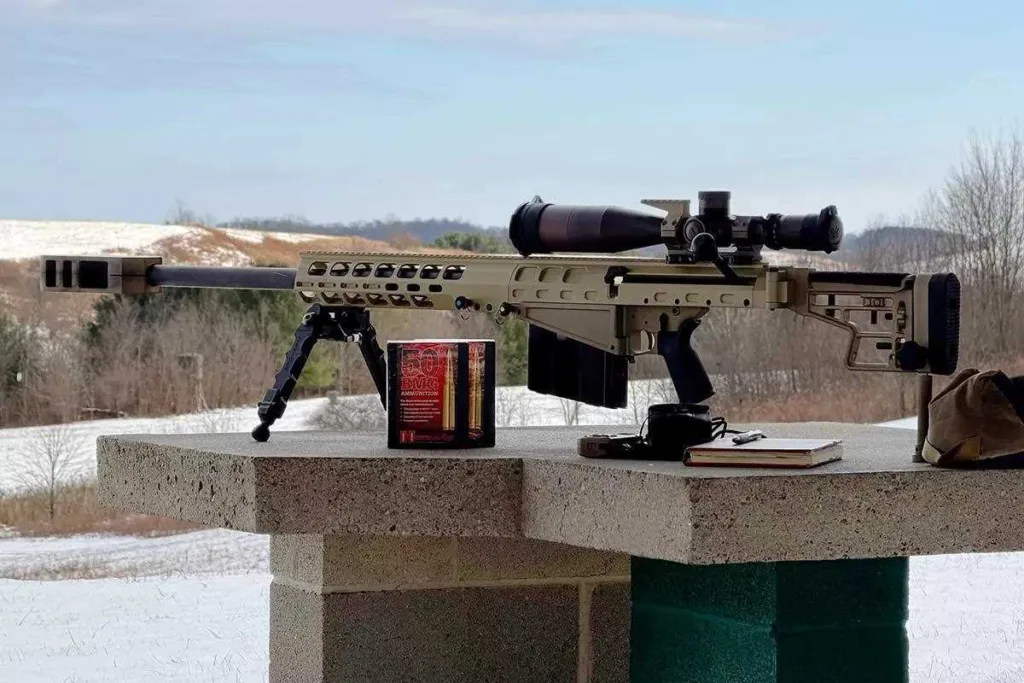
The Auto-Ordnance TAO50 is available in .50 BMG and .416 Barrett. Other options include a black or flat dark earth (FDE) anodized finish, a Magpul PRS Gen 3 precision-adjustable stock, or a side-folding adjustable aluminum stock with an integrated monopod. For this review, we’ll focus on the .50 Caliber model with side-folding adjustable aluminum stock, which Auto-Ordnance was kind enough to send over in FDE.
The TAO50 measures 61 inches and weighs 27.5 pounds out of the box (25.5 pounds with the Magpul PRS), but by the time I mounted the optic and loaded the magazine, we were tipping scales at approximately 36 pounds. Trust me when I tell you, however, that you don’t want a lightweight platform when shooting one of the most powerful rifle cartridges in common use.
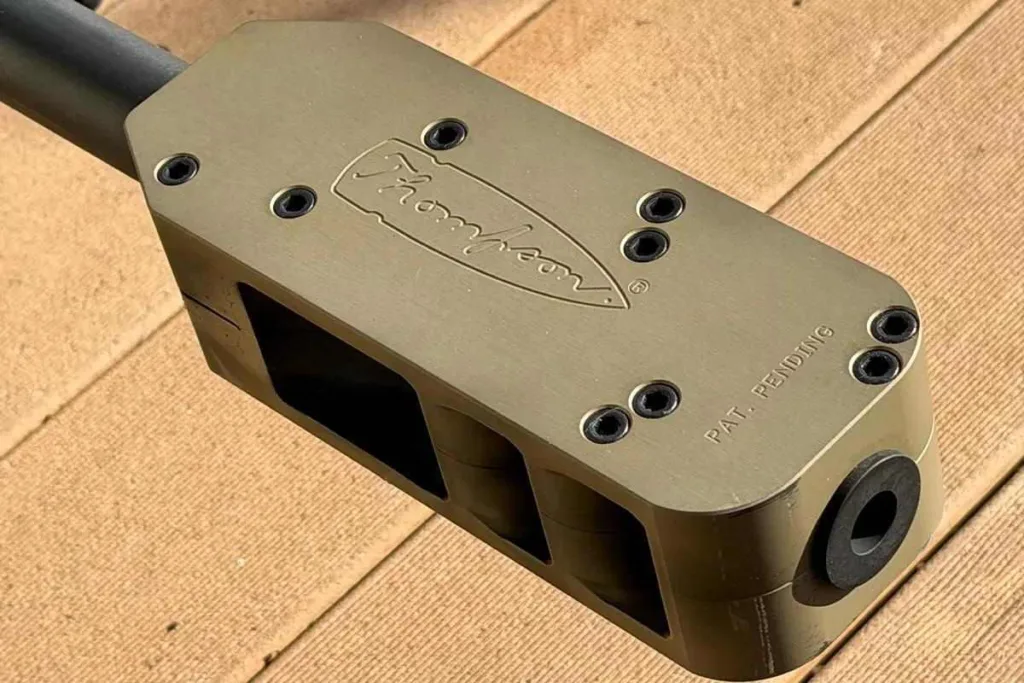
The Auto-Ordnance TAO50 features a high-efficiency muzzle break that has its own zip code. Rumor has it that this “cinder block” is remarkably effective at reducing felt recoil, an honorable goal on any .50 caliber BMG. Auto-Ordnance recommends using the TAO50’s factory brake or suppressors designed explicitly for use on bolt-action rifles due to higher pressures from gases not being expelled through a reciprocating action. Without a .50 caliber suppressor lying around, I’d have an opportunity to rattle my brain while seeing if the rumors were true.
Underneath this behemoth, you’ll find 1-inch–14 TPI threads on a 29-inch precision-rifled barrel with a 1:15 twist rate. The handguard features a full-length Picatinny rail at 12 o’clock and lightning cuts that allow the massive barrel to breathe. M-LOK slots sit at 3, 6, and 9 o’clock, and the TAO50 is equipped with a Picatinny rail hosting an extremely stable Accu-Tac bipod from the factory. Nice touch!
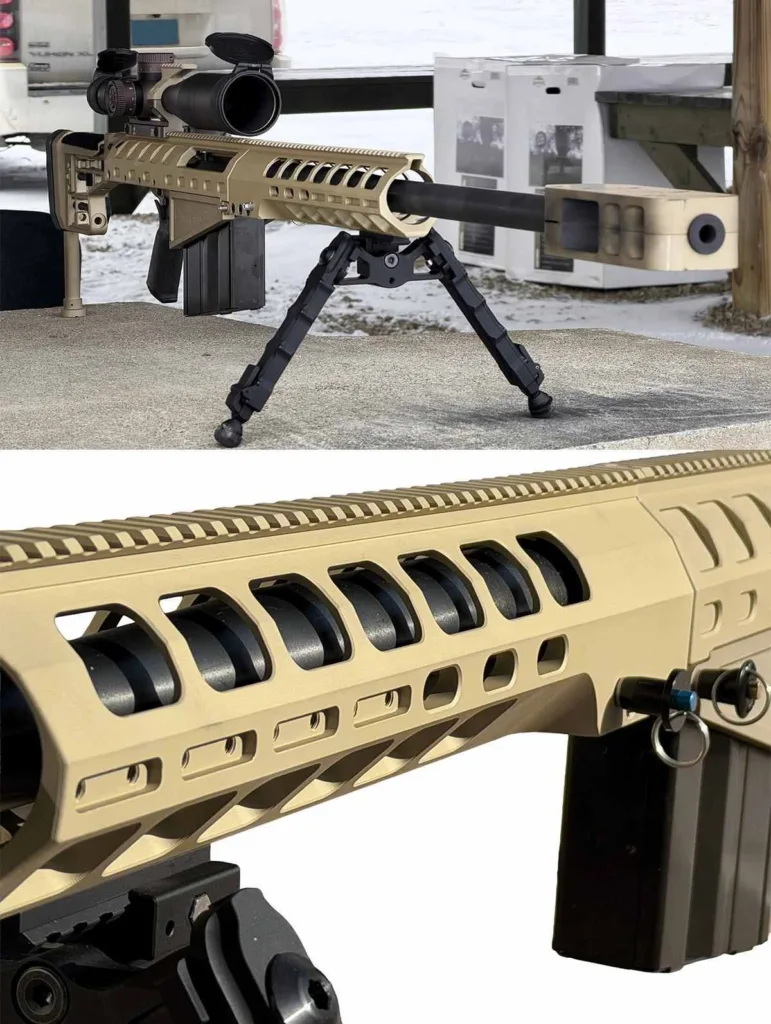
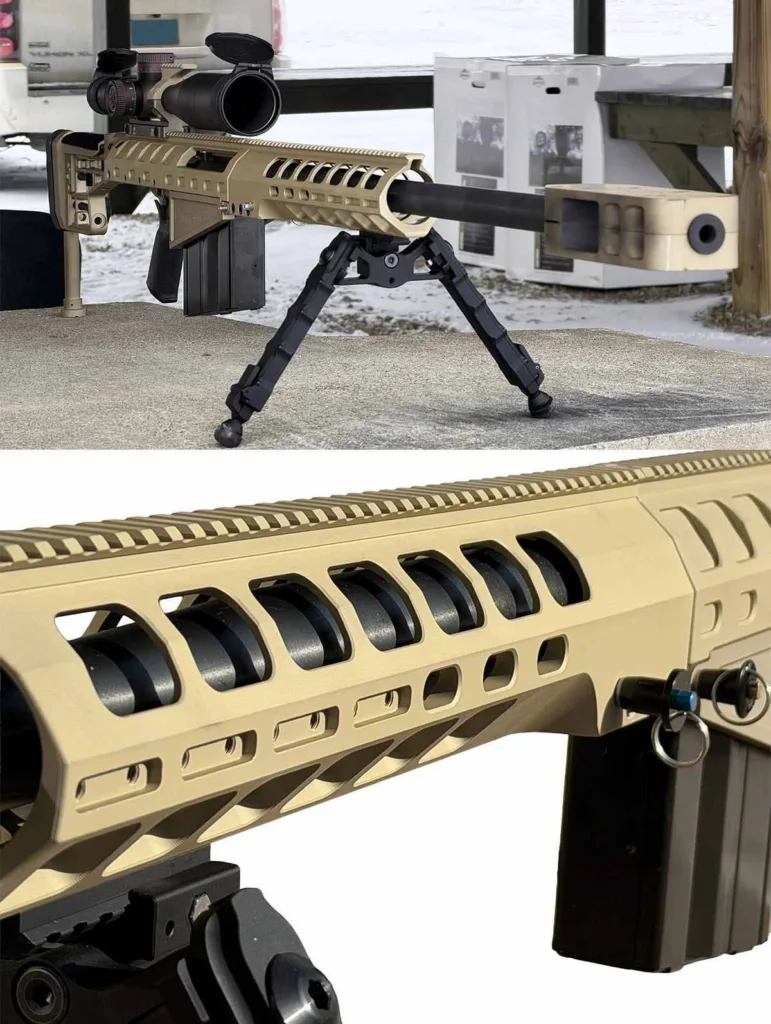
Loosen three screws in the handguard and pull a quick-release pin to quickly swap the barrel, adding convenience and serviceability. This is an attractive feature for those hoping to run .416 Barrett or to facilitate the integrally suppressed, hearing-safe barrel setup that Auto-Ordnance has been teasing at trade shows this past year.
Auto-Ordnance continues to make bold choices with a left side bolt handle and right-side ejection. The TAO50 is not the first to implement this, but the feature is designed to keep right-handed shooters target-focused, with their grip and trigger finger ready for faster follow-ups.
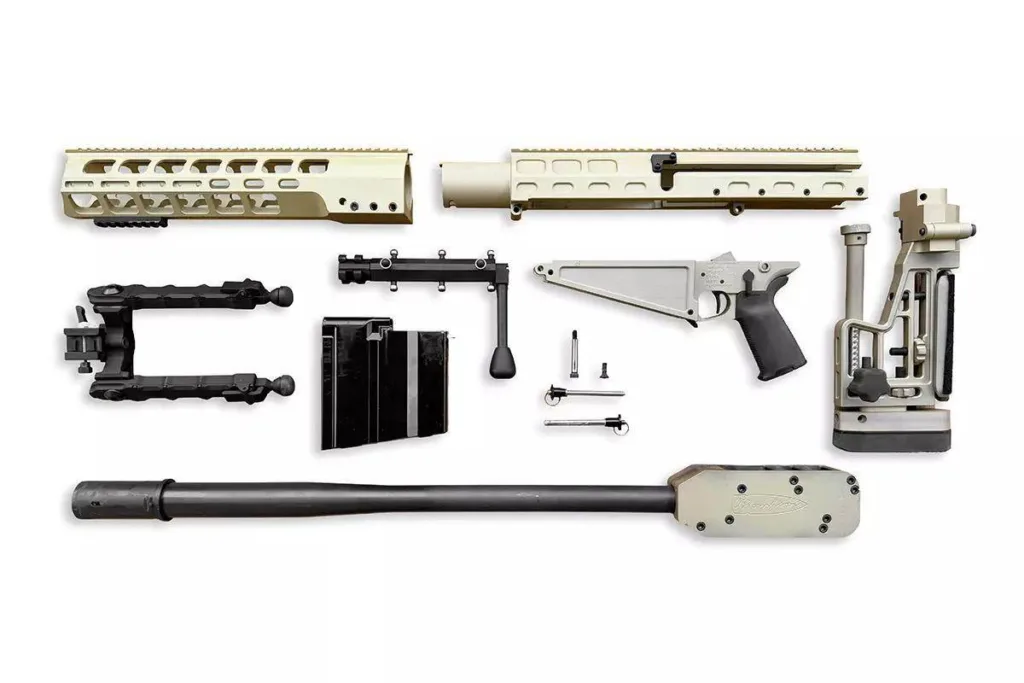
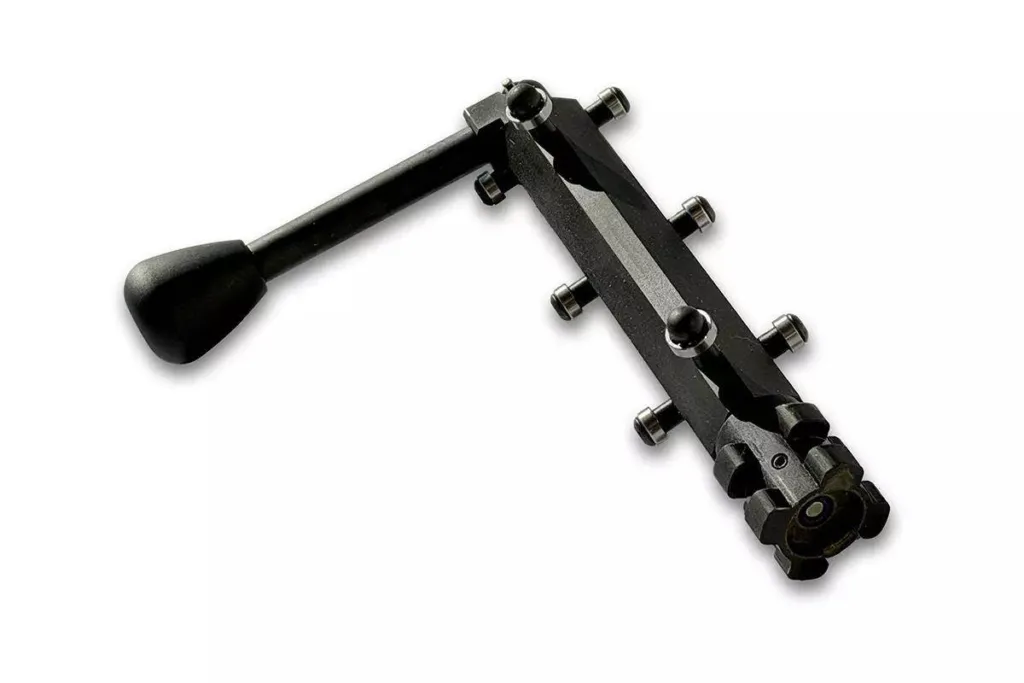
Arguably, an even more interesting choice is the bolt carrier, which glides along the inside of the receiver via patent-pending roller bearings affixed to the outside of the carrier. From a simple physics standpoint, the reduced friction alone should help, and there is much less surface area for dirt to get into, which should keep the action from feeling gritty in the field.
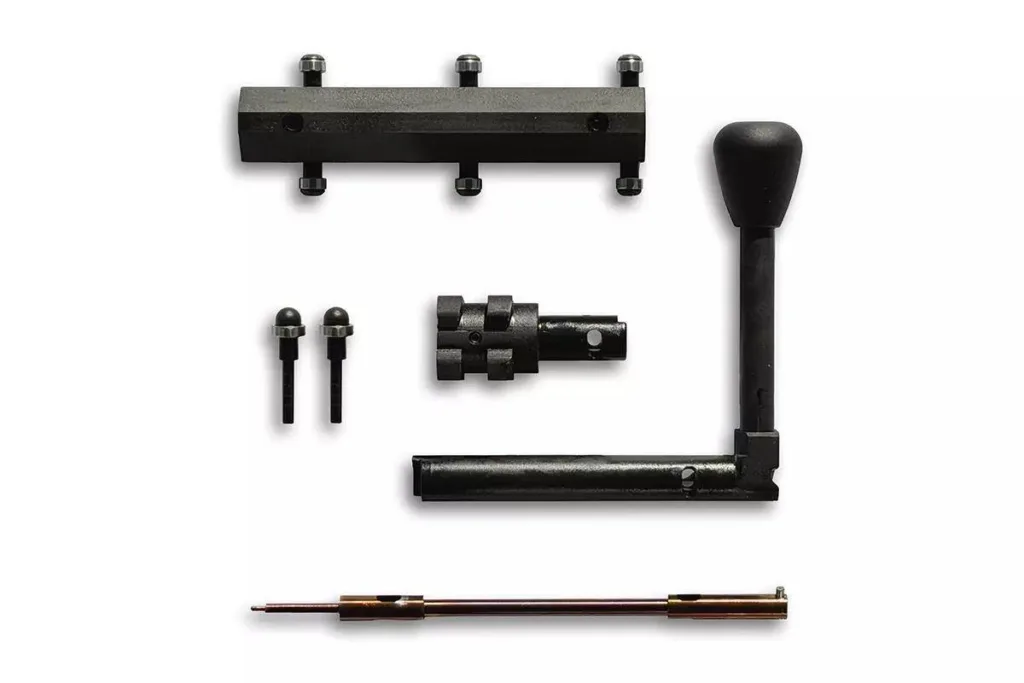
Once removed from the rifle, two of the roller bearings are easily pulled from the carrier, releasing the bolt, handle, and firing pin, for easy takedown and maintenance.
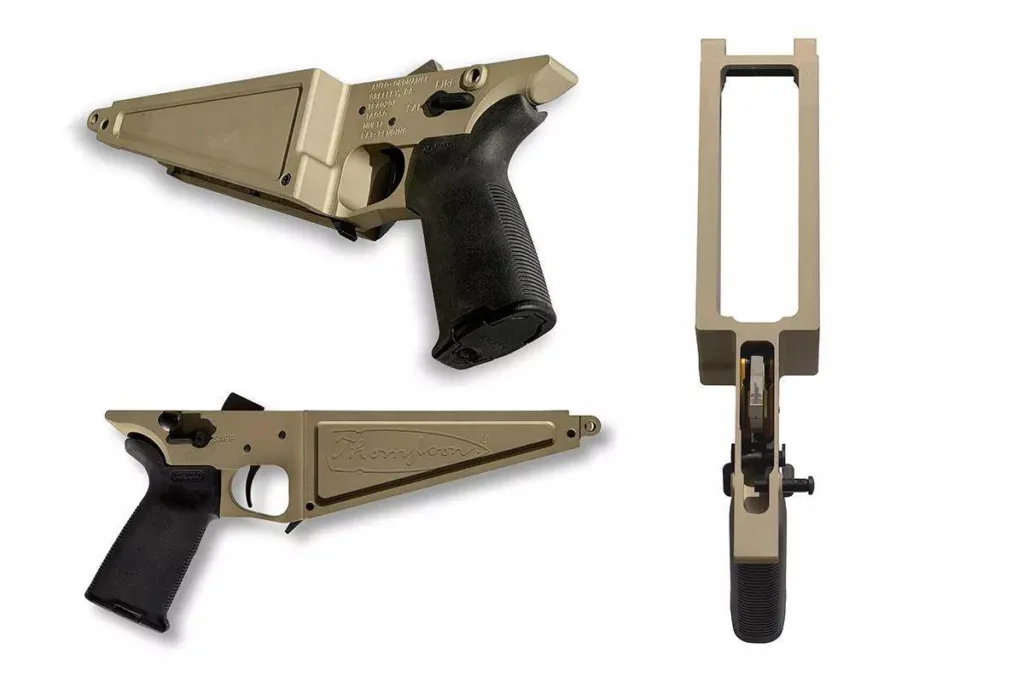
The AR-like lower receiver features forward and rear takedown pins, an AR-15-compatible ambidextrous safety selector, a Magpul MOE+ grip, and a Timney AR-10 trigger customized with heavier springs for reliable ignition of .50-caliber primers. This results in familiar controls and ergonomics for many shooters, along with a crisp, albeit heavy, eight-pound single-stage trigger. The magazine well has been enlarged to feed the TAO50 via a 10-round Barrett M107A1 magazine, and the magazine release is a paddle-style lever located at the lower rear of the magazine well, just forward of the trigger guard.
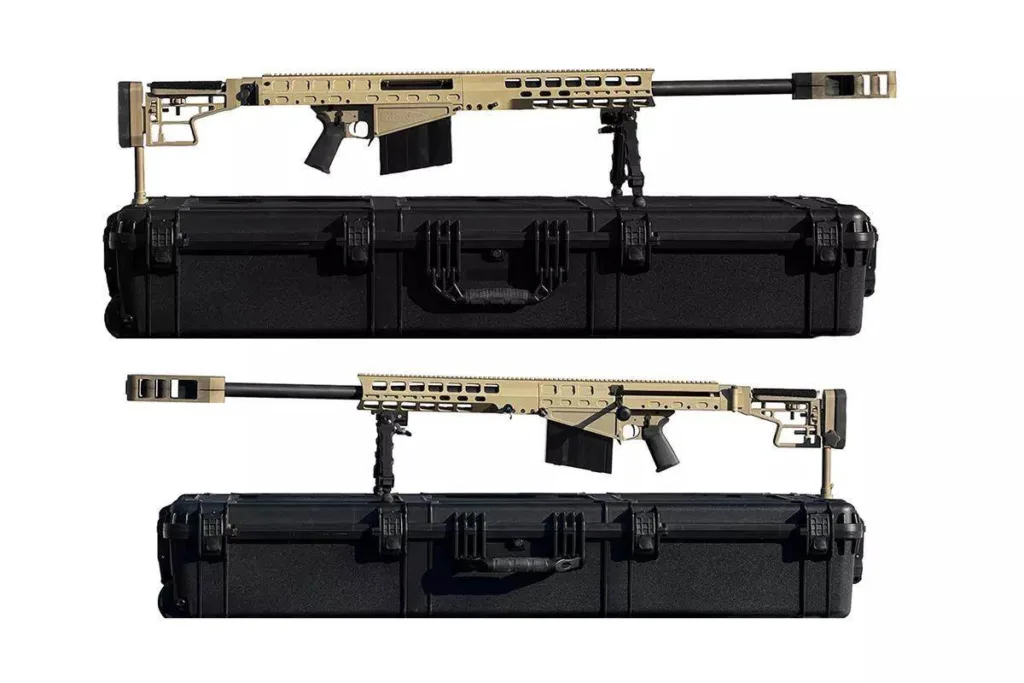
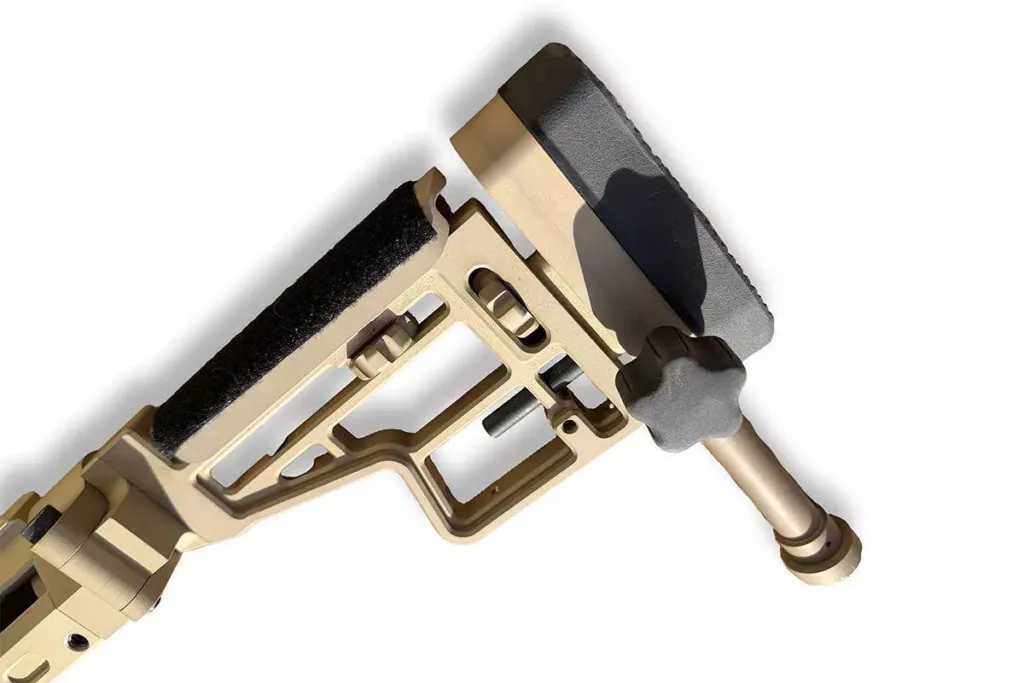
The folding aluminum stock retains most of the modularity of the Magpul PRS, without the buttpad height and cant adjustment. Cheek riser and length-of-pull adjustments are easy and toolless, and the butt pad is meaty and thick in all the right places. The trade-off in favor of the folding stock is convenience. Hard cases that fit most cars and trucks for a rifle this large don’t exist without disassembly. That is what you have to do with the Magpul version. For the folding-stock, it’s a matter of pressing a button.
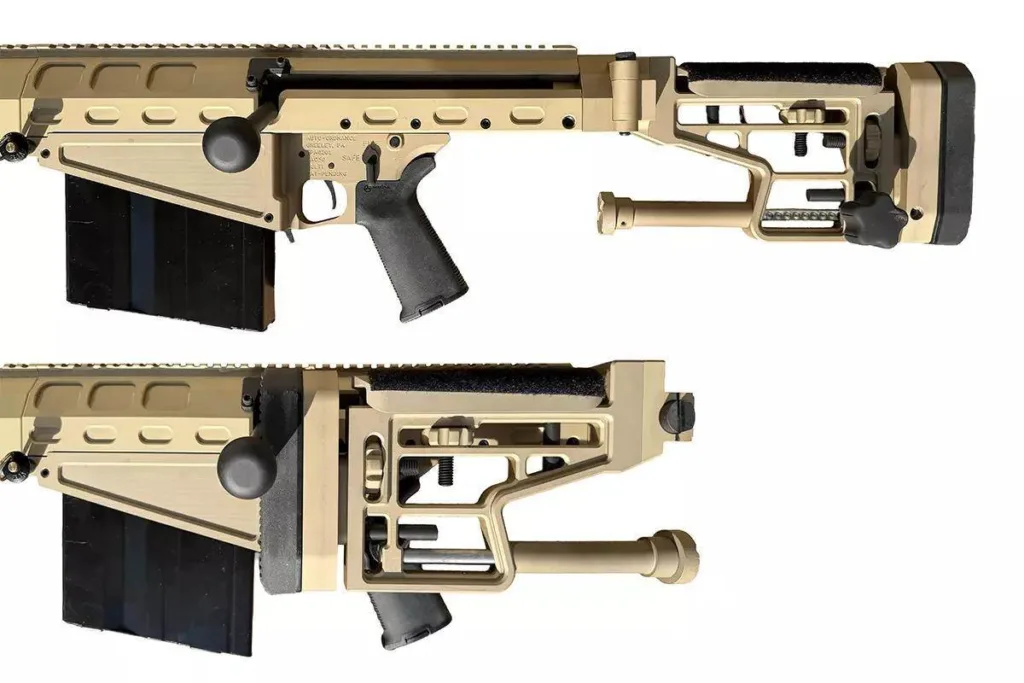
Another thoughtful addition to the folding stock is the built-in monopod, stowed and secured within the stock via a thumb screw and easily deployed. Larger elevation adjustments are made by adjusting where the thumbscrew engages with the monopod, and finer adjustments are conveniently made by reaching back with my left hand and twisting the monopod’s base in either direction.
Auto Ordnance ships the Thompson TAO50 in a heavy-duty, wheeled, hard rifle case for transportation and protection of the rifle, but the TAO50 isn’t terribly fragile and is more likely to damage other things than itself. My TAO50 came with one magazine, a manual, a gun lock, a 5/32” Allen key, safety glasses, and a pair of foam earplugs. A few trips to the range would determine if the juice is worth the squeeze, with an MSRP starting at $8,699.00.
Additional Components
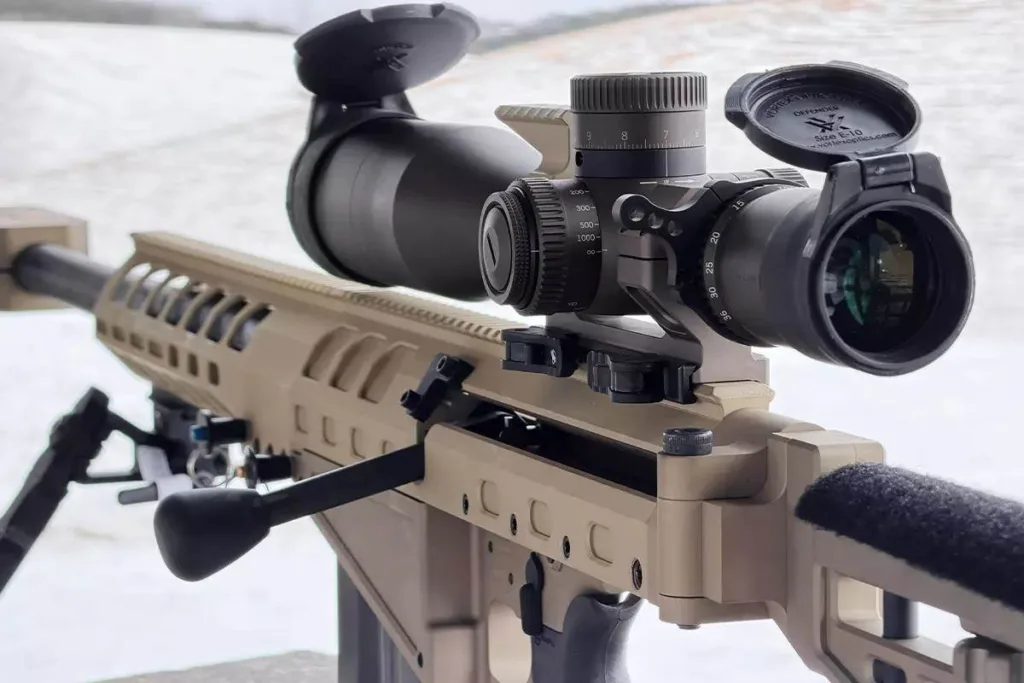
AccuTac makes heavy-duty bipods that would likely have been my choice for a rifle like this if Auto-Ordnance had not beat me to it, but optics and mounts aren’t simple with .50 BMG, and it is recommended that you use a scope rated explicitly for the caliber. Even then, you’ll need a mount that is equally up to the task. Luckily, I have an American Defense Manufacturing (ADM) 34mm Delta, selected to secure optics on SOCOM’s Special Operations Forces Combat Assault Rifle Program winner, the MK17 (SCAR 17), known for terrorizing optics due to harmonics generated by the closing of its heavy bolt.
I knew Vortex would have my back, and the best warranty is the one you don’t need, which is why I chose to run a Gen III Razor 6-36×56 FFP rifle scope with an EBR-7D MRAD reticle. The Razor would provide more than enough magnification for the shots I was planning, plenty of clarity and resolution, accurate turret tracking, and it is rated for .50 BMG. As a bonus, setting it up using Vortex’s L-Tec+ Zero System is simple and precise.
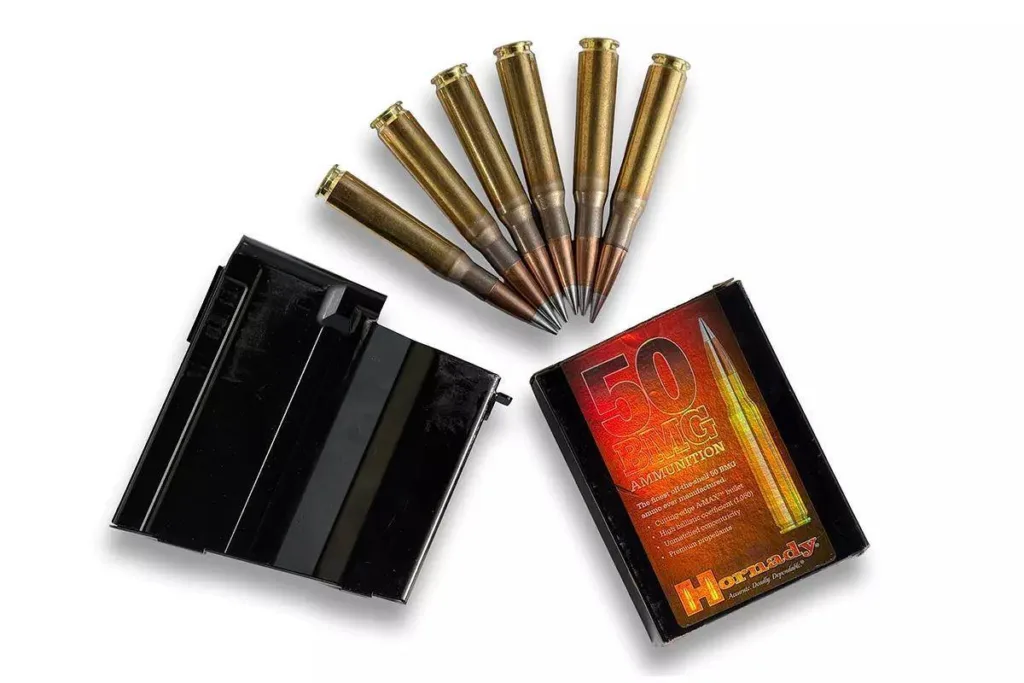
On to ammunition, both expensive and a critical consideration for long-range performance. I’m extremely thankful to Hornady for providing their 750gr A-MAX Match for this review. These have been the best .50 caliber loads in my experience, and one of the only commercially available match-grade BMG rounds I am aware of.
At the Range
You learn to respect the TAO50 the moment you attempt to lift it from the case, like an Arthurian legend attempting to free Excalibur from the stone, but we’re not shoulder-firing the TAO50, and we’re certainly not taking it for long walks on the beach. The rifle feels solid, as it should, and is subjectively handsome in this configuration. Aesthetics and admiration aside, it was time to head to the range, where the snow and 22-degree weather awaited.
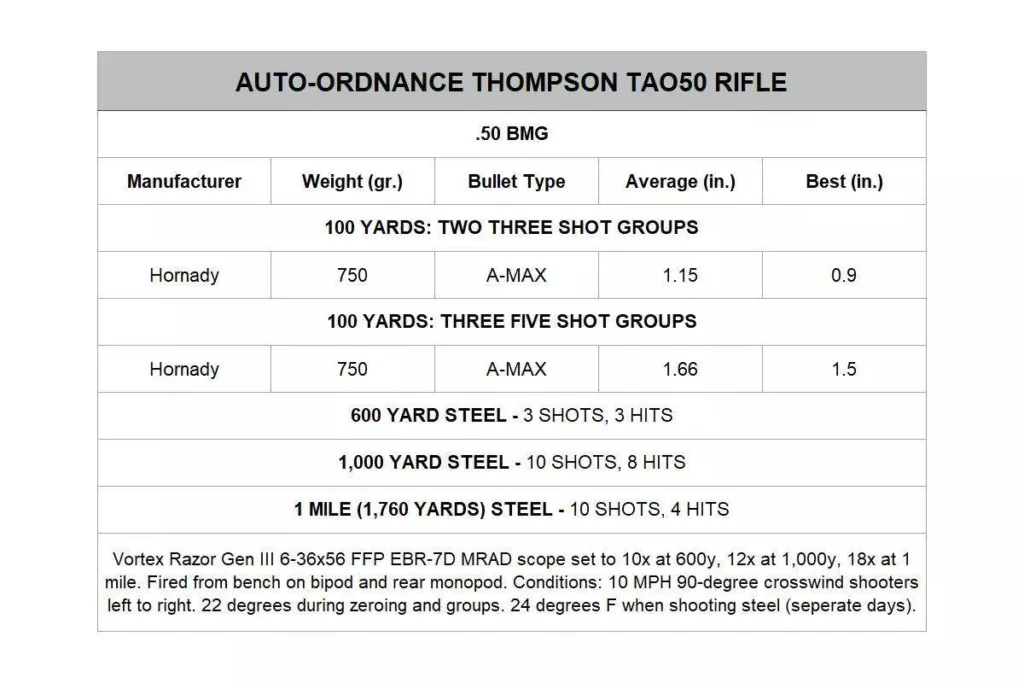
It’s best to deploy and rest the rifle on the bipod and grip, then unfold the stock and press the latch to secure it in the open position. You will do the same in reverse when stowing the rifle, with the folded stock’s buttpad securing under the bolt handle. I determined my average velocity of 2,647.1 feet per second (FPS) while zeroing the TAO50, with an impressive standard deviation of 5.4 FPS and an extreme spread of 17.5 FPS over 12 shots. Very well played, Hornady.
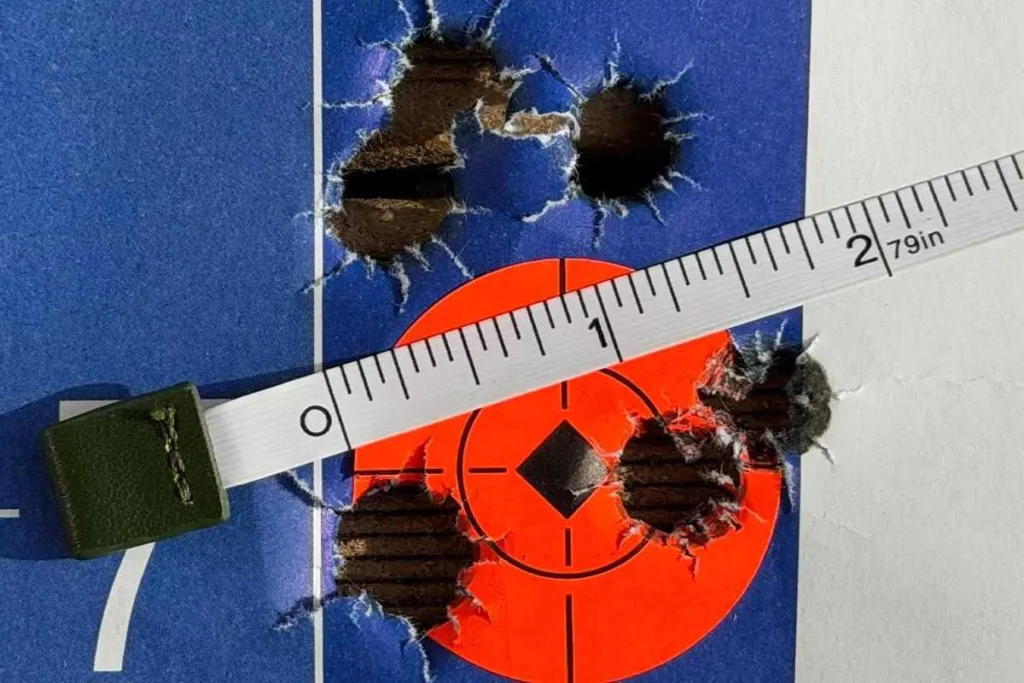
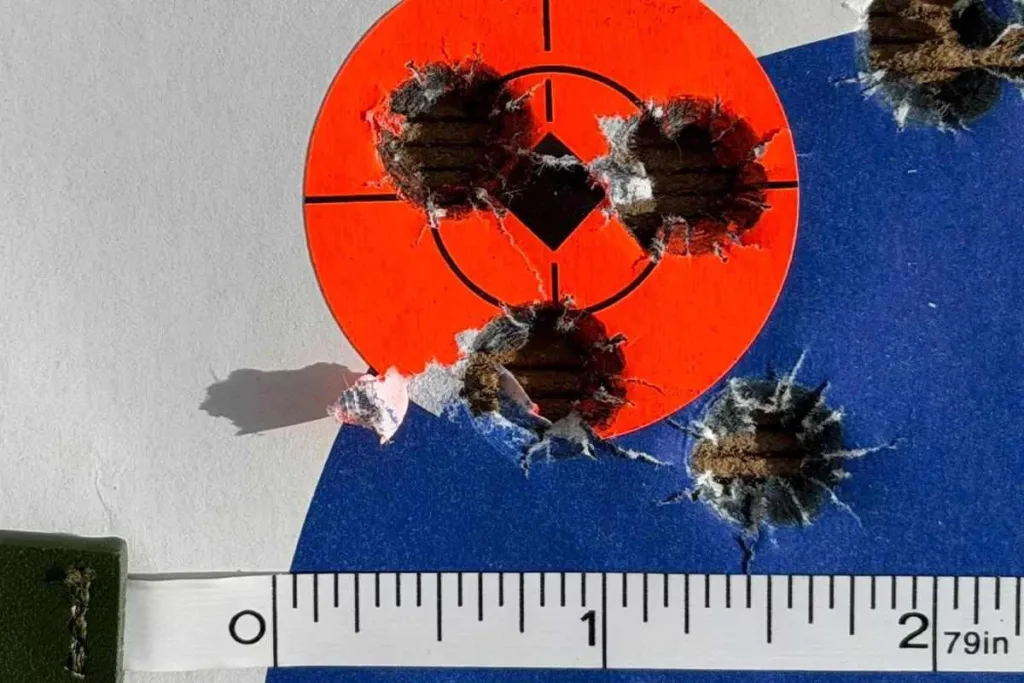
I’ll confess that the cold and the wind had me miserable, and I’ll remind people that .50 BMG is accurate but not precise. Not a surgical cartridge, it was designed to defeat heavy armor and destroy machinery, but without any further excuses, here are my results. My first three-shot group at 100 yards was slightly sub-MOA, after which I made a quick elevation adjustment and shot a second group, measuring 1.4 MOA. I took five shots for the next group, opening things up to 1.5 MOA, excellent for factory .50 BMG.
The action ran smoothly throughout the review, though I didn’t really have another big-bore to compare it to. How much difference the roller bearings make is hard to say, but it did run fast and very nicely once I got used to cycling the bolt with my left hand. I’m happy to report that the left-hand operation of the TAO50’s bolt is something that really wasn’t much of a challenge.
I mentioned earlier that the left-side bolt handle design is meant to facilitate faster follow-up shots, but I thought to myself that the recoil alone was likely to prevent me from getting back on target quickly. Well, the muzzle break on the TAO50 isn’t just there to encourage you to work out. The TAO50’s recoil impulse feels more like a .308 Winchester, or perhaps more like shooting slugs. The tradeoff is that I would not want to be within the blast radius of this highly effective yet unconventionally attractive muzzle brake bearing the classic Thompson “bullet” logo. Faster follow-ups? Yes, but temper your expectations, because it’s a .50 caliber, so you’ll still have to do your part.
Plenty of courses teach that but take care in setting up your optic to optimize eye relief and get comfortable behind the rifle. Firmly tuck the rifle into your shoulder pocket while loading the bipod. This will help mitigate recoil, get you back on target faster, and make sure you don’t get smacked in the orbital bone with your scope. When you get really good at it, you’ll be able to follow your own trace on longer shots.
The trigger breaks crisply at an imposing-sounding eight pounds, but perspective is key. Gravity has a lot to say about a 35-plus-pound rifle. If your shooting position and fundamentals are remotely adequate, the eight pounds of rearward pressure on the trigger shoe should go unnoticed, or at least that was my experience.
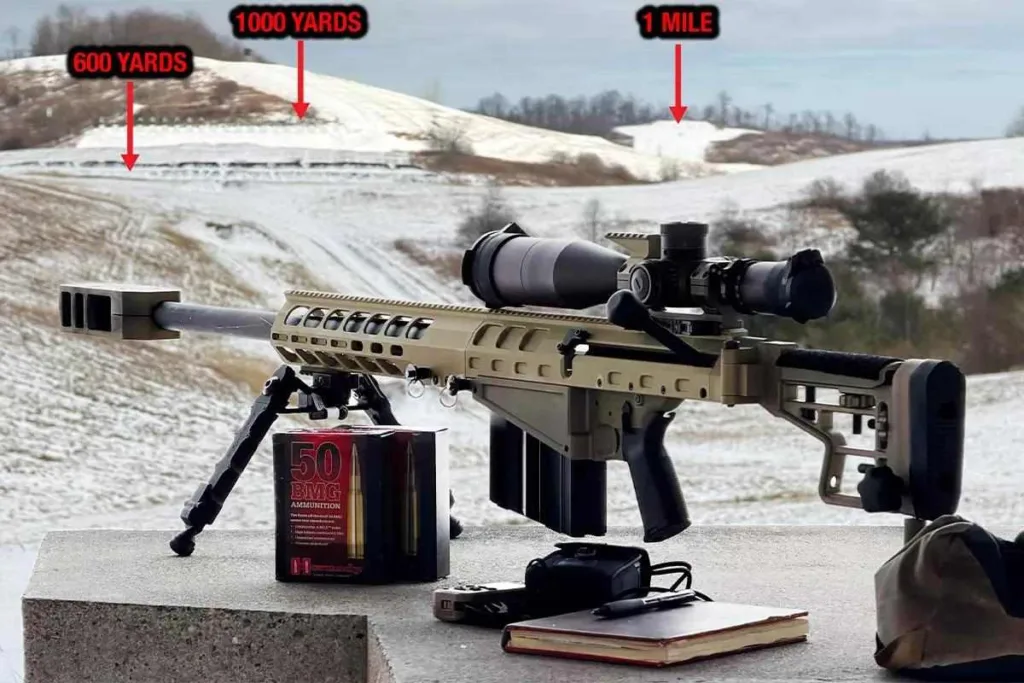
With below-freezing temperatures taking their toll, I stopped playing arctic warfare, but two weeks later, I’d face the frigid, snow-covered formidability of Thunder Valley Precision in Kimbolton, Ohio. Thunder Valley has heavier steel targets set up for .50 caliber at 600 yards, 1,000 yards, and 1 mile. As I sat in the warmth of my truck with the snow-covered landscape mocking my reluctance, I pulled on a balaclava, a pair of gloves, and reminded myself that being miserable as I was about to shoot the TAO50 without having to pay for ammunition (thanks again, Hornady) is why my friends hate me.
Today, however, I’m shooting steel at a distance, a long distance, one of my favorite things in the world. Between outings, I developed a firing solution based on velocity, ballistics, and environmental factors to make things more predictable. As I walked to the bench, I was thankful that I had remembered to leave the engine running so I’d have a warm place for my next coffee break.
Going a Mile
For 600 yards, I dialed 3.3 mils, determining there would be neither enough wind, spin drift, nor Coriolis effect to bother with windage correction. If you’re not familiar with the Coriolis effect, it is the apparent deflection of a bullet caused by Earth’s rotation while the projectile is in flight, or to put it simply, it is a very small adjustment that is only relevant at longer distances to correct for the Earth’s horizontal and lateral rotation under the trajectory. I let three shots off in steady succession, about five seconds apart, each stacking up at center mass. Before taking a pat on the back, I reminded myself that this was only 600 yards, so it’s best not to waste time or ammunition at close range.
I dialed 7.3 mils for the 1,000-yard target and had my scope set to 10x-12x for these shots, as backing out magnification helps me see the bullet trace. I dialed my windage to compensate for spin drift and Coriolis, because .2 mils at 1,000 yards is 7.5 inches. A relatively straightforward wind call that had me holding half a mil to the left, and I sent it.
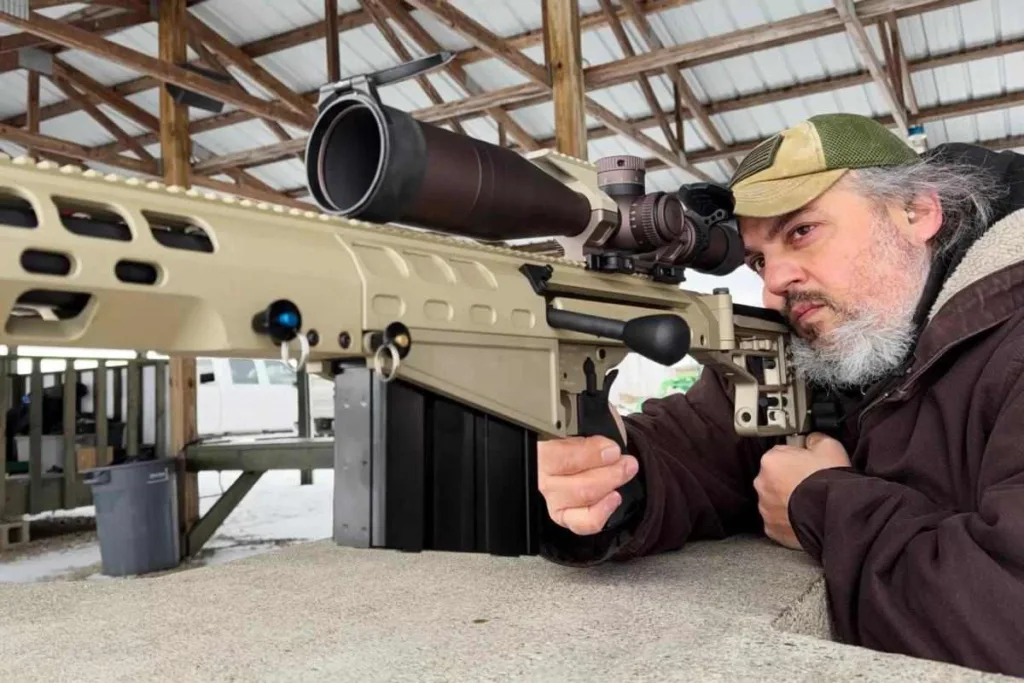
I unloaded a box of Hornady 750-grain A-MAX Match on this poor target, ringing its bell eight times out of ten and earning myself a trip to the truck. Enjoying the spoils of weekend war, the one-mile target mocked me from atop its isolated perch, knowing the tricky wind in the valley beneath would throw me curveballs. This is where things start to open up, as velocity slows to around 1,375 FPS and the bullet becomes more susceptible to deflection.
More excuses. One more sip of coffee, which you should never drink before long-range shooting because of caffeine jitters, and it’s time for the main event. If you’ve ever done this, you know it isn’t very easy, with many variables, and some that don’t like to hold still. Throw in the environment, and it’s a real crap shoot.
I set my magnification to between 16x and 18x, dialed my elevation to 17.6 mils, and compensated .4 mills of windage for spin drift and Coriolis. The wind call wasn’t as straightforward, but you can read changing directions and speeds until you’re blue in the face, and at these temperatures, I don’t think it would take that long. I made my best calculation, holding 1.4 mils left and hoping for a Christmas miracle, but fell short, literally. Of all the surprises and silver linings, however, it looked like whatever voodoo math I used on that wind hold was dead on.
I dialed elevation to 17.8 mils and decided that all else should stay the same. This was another splash in the snow, but it looked like it was right there. I decided to push the elevation to 18 mils and found my shot just over the target. I dialed back to 17.9 mils with the same wind call. To be fair, the sound from a mile away with doubled-up hearing protection and a balaclava wasn’t the giveaway, but watching the trace sail into the target and seeing it sway from the impact was more than satisfying enough. In the end, I made four out of the ten shots I took at one mile. I was pleased with the results, though I’d like to get another crack at it in the sun.
Conclusion
This is a great rifle, and one I’d love to own. Would it be one of my high-round-count affairs that sees the range regularly? Well, I do have access to Thunder Valley Precision, but the TAO50 is one of those “special occasion” rifles that you take out either for a solitary session of pushing your long-range limits or to share with your friends in awe of its formidable power. You’ll make most guys’ day like this.
I’d like to run a suppressor on the TAO50, and the fact that Auto-Ordnance engineers have called their integrally suppressed pre-production barrel hearing safe strikes me as a potentially expensive addition to my bucket list. I can’t think of anything I would change, other than being curious how much weight could be reduced without sacrificing shootability, which is essential as stability and recoil management are paramount to having a good experience with the TAO50. I may also look into fine-tuning the trigger, which works great out of the factory but might be improved without sacrificing reliability.
A .50 caliber BMG is a considerable commitment. From merely paying for one to paying to equip and feed it, it is an expensive proposition, but a rifle like this is something I’d rather not cheap out on. Carrying the TAO50 has got to be something you want to do, and having a place worthy of its tremendous power within driving distance is a privilege. If, however, the stars, sun, and the moon align upon a conclusion that lands one of these rifles in your arsenal, then you won’t be disappointed. If you like to shoot things far, far away, you won’t be disappointed. And if you want to impress your friends with an awesome piece of American-engineered heritage, combined with contemporary design, features, and modularity that the .50 caliber BMG rifle deserves, then the Auto-Ordnance Thompson TAO50 may be the choice for your long-range precision accomplishments.
Auto-Ordnance Thompson TAO50 Specs
- Caliber: .50 BMG
- Action: Bolt-Action
- Magazine: 10-round Barrett M107A1 (1 included)
- Barrel: 29” Precision Rifled, 1:15
- Muzzle: High Efficiency Muzzle Brake
- Sights: Optics Ready
- Stock: Folding aluminum with adjustable cheek riser and length of pull.
- Overall Length: 51.25 in. (stock folded) 61 in. (stock deployed) 62 in. (Stock deployed, buttpad extended)
- Weight: 27.5 lbs.
- Trigger Pull: 8 lbs.
- Finish: FDE (Anodized)
- Additional Accessories: Magazine, manual, gun lock, 5/32” Allen key, safety glasses, foam earplugs, custom rolling hard case
- MSRP: From $8,699.00
- Contact: Auto-Ordnance.com, (508) 795-3919