New Pentagon report on China’s military notes Beijing’s progress on LLMs
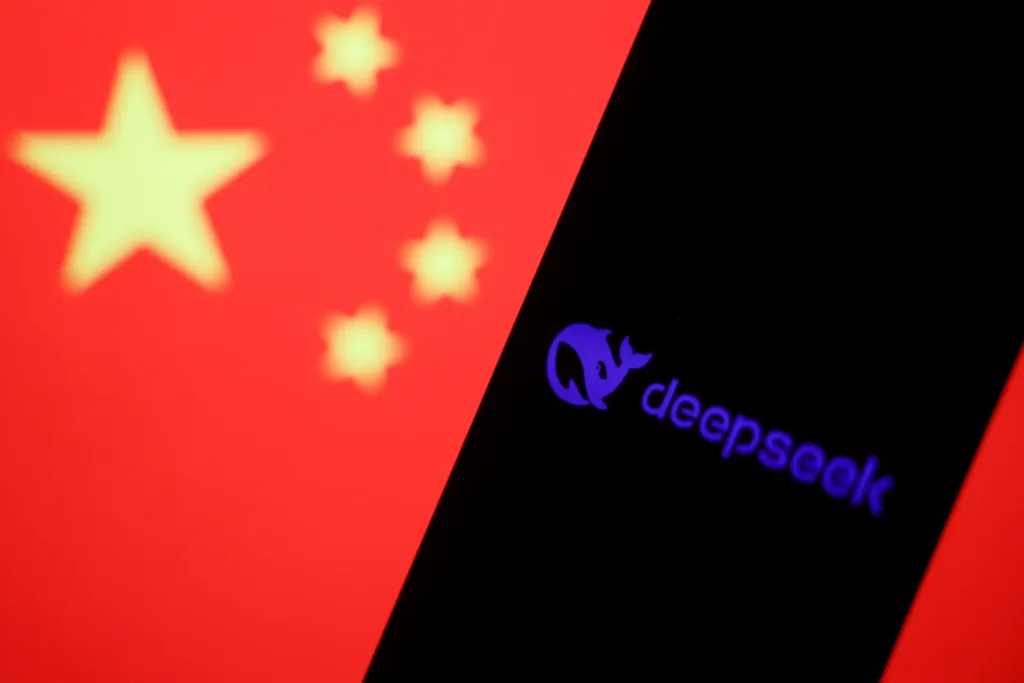
The Defense Department’s latest report to Congress on China’s military developments stated that Beijing has been catching up with the United States in the race for new generative AI capabilities.
This year’s iteration of the annual study was quietly released by the DOD this week before the Christmas holiday.
“In 2024, China’s commercial and academic AI sectors made progress on large language models (LLMs) and LLM-based reasoning models, which has narrowed the performance gap between China’s models and the U.S. models currently leading the field,” Pentagon officials wrote.
Those types of tools can generate software code, text, images, audio and other media following human prompts.
“LLMs and LLM-based reasoning models are useful for a range of military applications, including coding tasks to assist cyber operations, question-answering tasks to assist military decision-making, and synthetic content tailoring to assist influence operations. The [People’s Liberation Army, or PLA] continues to use [military-civil fusion, or MCF] mechanisms to ensure China’s academic and commercial AI communities provide robust, continuous support to military research and development projects,” the new Pentagon report noted. “These mechanisms provide the PLA with an opportunity to incorporate recent private sector AI breakthroughs into military systems.”
The Pentagon is also embracing generative AI. Earlier this month, the department rolled out a new platform called GenAI.mil to deliver commercial options directly to millions of members of its workforce. Google Cloud’s Gemini for Government products were the first to be introduced as part of the new system. The initial rollout prompted mixed reviews and many questions from users.
On Monday, officials announced that a suite of “frontier‑grade” capabilities offered by xAI for Government will soon be added to the GenAI.mil platform. Elon Musk is the founder of xAI, which makes the Grok chatbot that is widely used on Musk’s social media platform X.
“This initiative will soon embed xAI’s frontier AI systems, based on the Grok family of models, directly into GenAI.mil. Targeted for initial deployment in early 2026, this integration will allow all military and civilian personnel to use xAI’s capabilities at Impact Level 5 (IL5), enabling the secure handling of Controlled Unclassified Information (CUI) in daily workflows. Users will also gain access to real‑time global insights from the X platform, providing War Department personnel with a decisive information advantage,” according to a Pentagon press release.
The new DOD report on China notes that in 2024, Beijing continued to invest in AI tech for a variety of military applications, including unmanned systems; intelligence, surveillance and reconnaissance (ISR) collection and analysis; decision-making assistance; cyber operations; and “information campaigns.”
Defense officials and analysts say advances in generative AI capabilities make it easier to create fake content that could be employed in information ops.
Last year’s Pentagon report to Congress on China’s military developments noted that PLA publications have argued that LLMs can boost efficiencies for creating synthetic media, including so-called deepfakes.
“Leading generative AI technologies have greater authenticity and require less human input than previous AI technologies used for deepfake creation. PRC military researchers have complained that the PLA lacks the necessary staff with adequate foreign-language skills and cross-cultural understanding for authentic content generation. Leading generative AI technologies offer a potential technical solution to overcome this deficiency. Numerous PRC institutions, including leading technology companies, such as Baidu, Alibaba, and Huawei, are developing generative AI technologies for capabilities such as text, image, audio, and video creation,” DOD officials wrote in that document.
This year’s report, released Tuesday, noted that Beijing could use information operations to support military campaigns against Taiwan, a self-governing island which the Chinese Communist Party aims to bring under its control.
“China almost certainly has recognized the necessity of controlling the internal and external narrative in conflict and seeks to develop methods to better implement information warfare,” Pentagon officials wrote.
They added: “Beijing almost certainly considers cognitive domain operations to be a key component of its pressure campaign against Taiwan, intended to weaken Taiwan’s will to resist and heighten social divisions in the country. Beijing uses the information space to spread political narratives, influence the Taiwan populace, and emphasize PLA activity around Taiwan. In May and October 2024, China exploited the timing of military exercises around Taiwan to combine official accounts and proxy accounts impersonating Taiwan citizens to exaggerate the PLA’s capabilities and spread disinformation narratives about U.S.-Japan unwillingness to aid Taiwan’s defense.”
One military option that Chinese leaders may be considering is a “joint blockade campaign” against Taiwan, according to the DOD report. In that potential scenario, China would likely employ information operations in an attempt to “further isolate and degrade the island and to control the international narrative of the conflict,” it noted.